
Most advice on local landing page SEO starts in the wrong place. It treats the page as a box-ticking exercise for city names, when the job is to make the page the clearest proof that a business is local, relevant, and worth contacting now. That shift matters because UK local discovery is still overwhelmingly Google-led, and the local page often sits beside the Google Business Profile, map results, and AI summaries rather than competing with them in isolation.
That change in behaviour is not subtle. UK search-share reporting places Google at about 93.5% for desktop-plus-mobile searches in mid-2025, which means a local landing page in the UK is built mainly to win inside Google's local ecosystem, not to spread effort evenly across every engine (Visionary Marketing local SEO statistics). The page also has to support immediate intent, because Google and Ipsos research cited in UK local SEO reporting says 76% of people who search for something nearby on a smartphone visit a related business within a day, and 28% of those searches result in a purchase (Rank My Local UK local SEO statistics).
That is why thin city swaps underperform. A local page needs to act like a trust asset, a conversion asset, and a location signal all at once. For a useful reference on the structural basics, the Keyword Kick location page guide is a solid practical starting point, especially for teams that need to move beyond template thinking.
Rethinking Local Landing Pages for Modern Search
The old habit is to copy a service page, swap in a city name, and call it local. That misses how people search and how Google surfaces nearby businesses. It also ignores the way local landing pages now sit inside a busier result set, where the page may support map-pack clicks, Google Business Profile actions, and AI-driven discovery before anyone reaches the site.
Why the page has to do more than rank
A local landing page is often the first place a visitor checks for proof that a business really serves their area. If the page looks generic, the user has little reason to trust it over a competitor with clearer local signals. If it is built around a real location, service area, and contact path, it can turn a quick search into a call, booking, or direction request.
The practical difference shows up fast. A thin page says Plumber in Leeds. A strong page says emergency callouts across LS1–LS17, engineer Dave, average 40-minute response. That gives the visitor specific service detail, a named person or branch that feels real, and a clear next step without forcing them to dig through the site.
Practical rule: if the page still works after you swap in a different city, it is probably too generic.
What AI overviews change
AI overviews and answer-engine behaviour raise the bar for proof. Search systems are more likely to summarise pages that show clear local relevance, structured information, and credible supporting detail. That does not make traditional SEO obsolete, it makes weak pages easier to ignore.
Local landing page SEO works best when the page reads like a source of truth, not a keyword target. The page should answer the obvious local questions immediately, such as whether the business serves the area, how the service is delivered, and what makes the branch or team legitimate. For a practical reference on the structural basics, the Keyword Kick location page guide is a solid starting point, especially for multi-location teams that need to move beyond template thinking.
For multi-location brands, the bar is even higher because the same page may be judged by someone arriving from the map listing, a branded query, or a conversational search result. A local page should earn the click, earn trust, and make contact easy. Anything less leaves revenue on the table.
Designing a High-Converting Local Page Template
A local page template works only when it does two jobs at once. It has to support local discovery, and it has to make a visitor comfortable enough to contact you. That starts with the page title, H1, and opening copy. They should name the service and the location clearly, without sounding forced. It continues through the proof layer, where the page shows that real people, in a real branch or service area, stand behind the offer.
The elements that carry weight
A useful template usually opens with a clear H1 that names the service and place naturally, followed by a short paragraph that says who the page is for. The body copy should then move into local service detail, not recycled boilerplate. Mention the neighbourhoods you serve, the branch the customer will deal with, or the service limits that matter before they enquire.
The strongest local pages also include locally relevant FAQs. These should answer the questions a nearby customer asks, such as service coverage, response times, parking, or whether the branch handles certain jobs. A good FAQ reads like this. “Do you cover Croydon same-day?” “Yes, for bookings before 2pm.” That kind of answer removes doubt fast and keeps the page grounded in real operations.
Use genuine local proof as well. Named team members, branch-specific testimonials, and local photos do more than decorate the page. They show the visitor that the business is active in that place, not just reusing a city name in a template. A testimonial line can be as simple as, “Sarah at our Leeds branch got the job booked the same day, and kept me updated throughout.” That is specific enough to feel real, and practical enough to copy.
For teams that need a landing-page structure that converts beyond local search, Orbit AI's landing page guide is a practical companion, especially where form design and lead capture need to be tightened up.
Schema and structured trust
LocalBusiness schema should mirror the visible page content, not replace it. Include Name, Address, Phone, opening hours, and any service-area details that fit the business model. Consistency matters because search engines use that structure to understand what the page represents and whether the information matches other sources.
The schema should reflect the same NAP data that appears on the page and across the wider business footprint. If the page is for a branch, that branch's details belong there. If it is for a service-area business without a public storefront, the schema and visible content should say so directly rather than implying a customer-facing address that does not exist.
One more point matters on mobile. Contact options should be obvious above the fold. A well-built page does not hide the phone number, the route to the contact form, or the service promise until the bottom of the page. It puts them where a local user can act on them quickly.
Strong local pages feel specific because they are specific. They are built around a real place, a real team, and a real path to conversion.
Aligning Pages with Google Business Profile and Citations
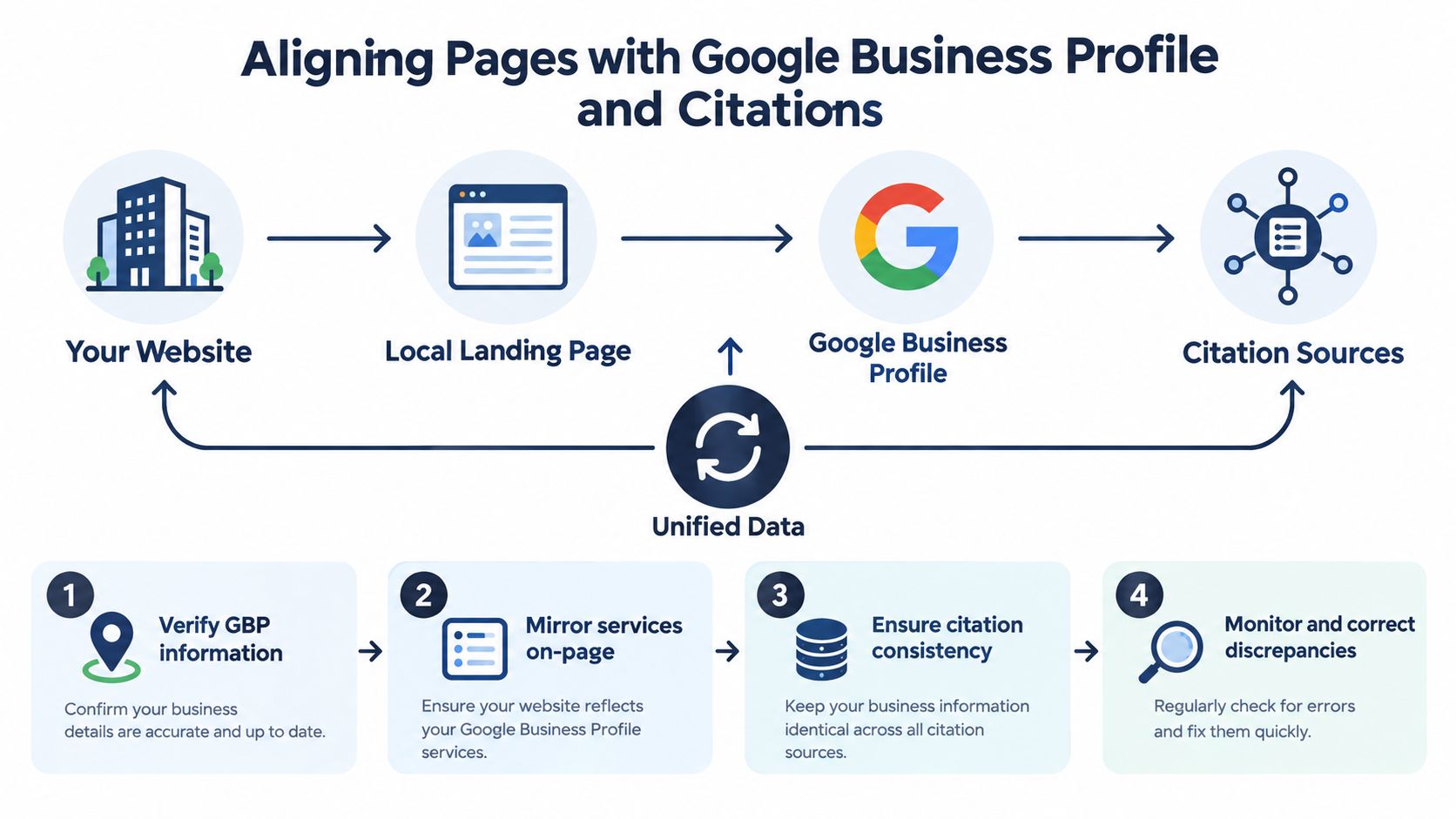
A local landing page should function as the destination for every local trust signal, not merely as a page that repeats a city name. Its Google Business Profile, citations, reviews, and internal links should all support the same branch or service area. When those sources agree, the page can convert visitors arriving from Maps, organic search, and AI-generated search summaries.
Why the GBP link matters
When a branch or service-area page exists, link the Google Business Profile directly to that page rather than the homepage. A user who taps the listing should see the relevant services, coverage details, contact route, and local proof immediately. Sending that user to a generic homepage adds another decision before they can enquire.
Want a free audit like this for your own site?
We'll show you exactly what's holding your rankings and conversions back. No sales pitch.
Get My Free AuditThe UK SEO Handbook recommends linking each GBP listing to its specific local landing page. It also advises using LocalBusiness schema with location-specific NAP, opening hours, and relevant geo, telephone, and URL fields (SEO Handbook local landing pages). Keep those fields consistent with the visible page. Structured data cannot correct an address or phone number that conflicts with the profile.
Profile completeness supports this journey, but it does not replace persuasive page content. UK-focused reporting states that complete profiles receive seven times more clicks than incomplete ones and are 2.7 times more likely to be considered reputable (Visionary Marketing local SEO statistics). Treat those figures as a reason to maintain the profile, not as a substitute for local evidence, clear service information, or a strong call to action.
For practical profile setup, see the Amax Marketing Google Business Profile optimisation guide. Teams can also review this guide to optimize for local search intent, particularly when aligning profile categories, services, and landing-page content.
Citations and consistency across the footprint
Citations provide corroboration across directories, industry sites, and other business references. Check the business name, address, phone number, opening hours, and service description against the page and GBP. Remove outdated listings where possible, and document changes so every location receives the same update.
Small discrepancies can create a real conversion failure. A profile showing a Leeds number while the landing page displays an 0800 number forces the caller to guess which line is monitored, and some will not call. An old trading name or unsupported service area can produce the same hesitation, especially when a visitor is comparing several providers.
The page still needs original local content and a clear next action. A consistent citation footprint strengthens that decision by confirming that the business, location, and service shown in search are the same business the customer can contact.
Technical Architecture and Internal Linking Strategy
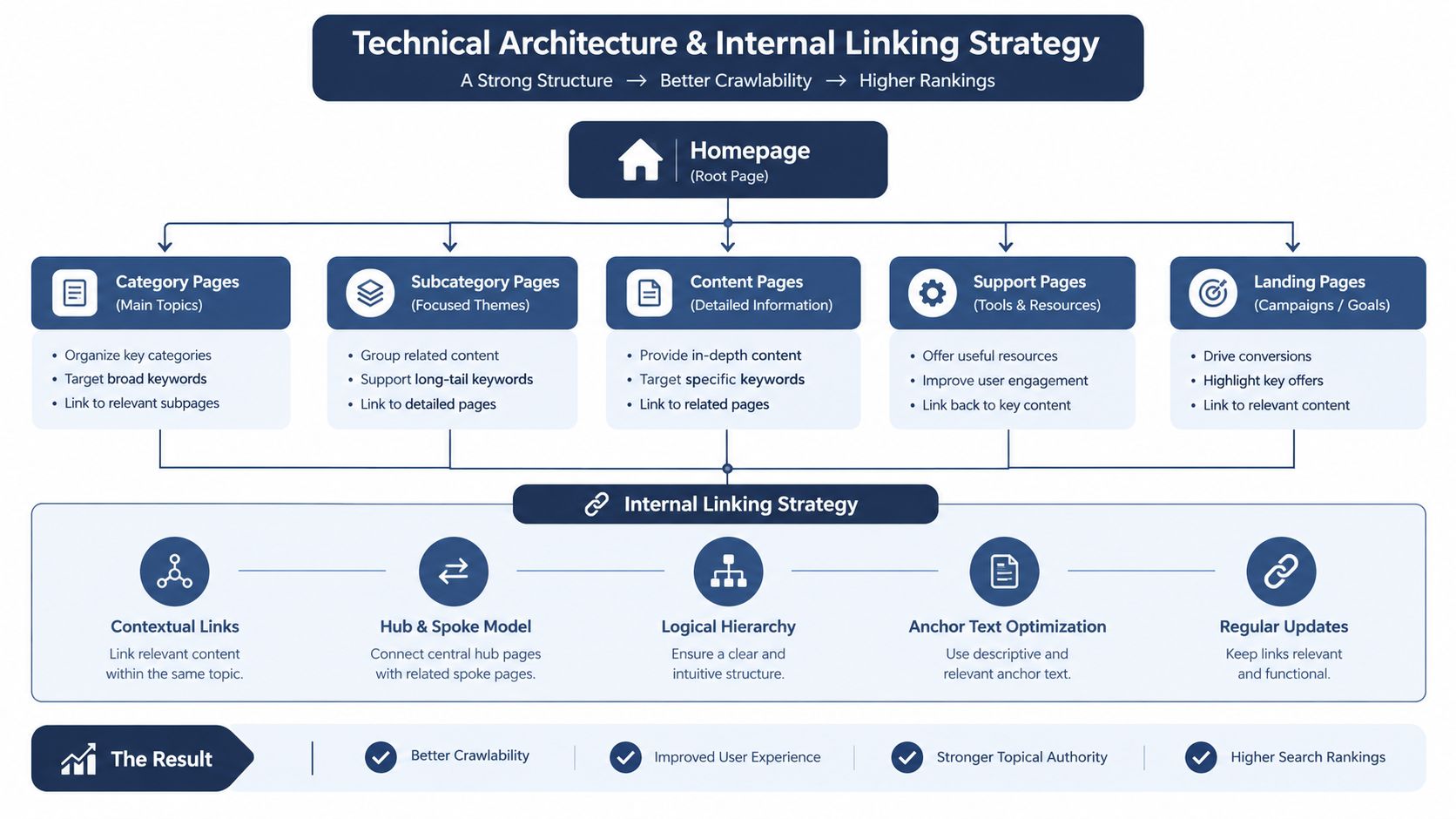
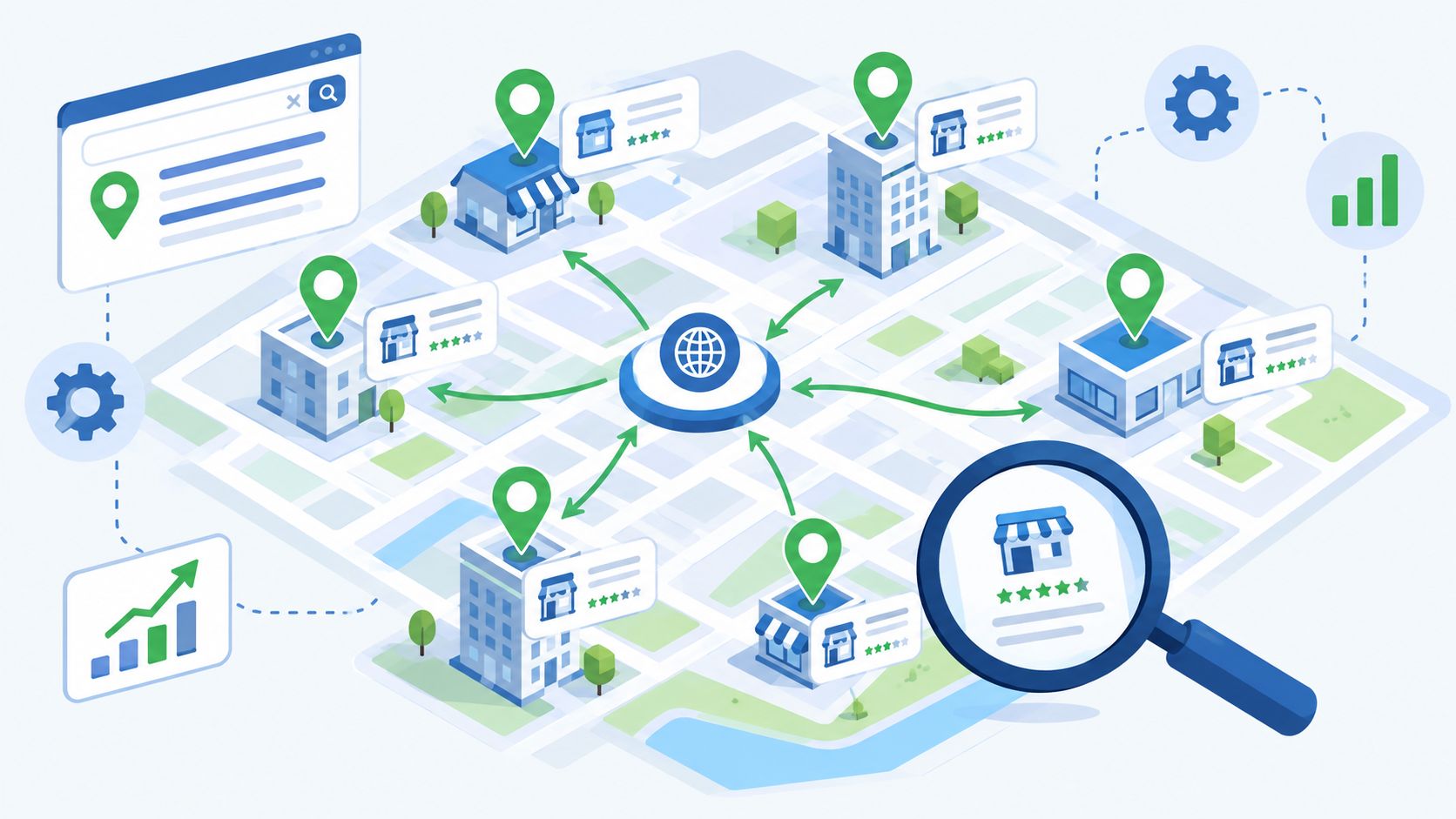
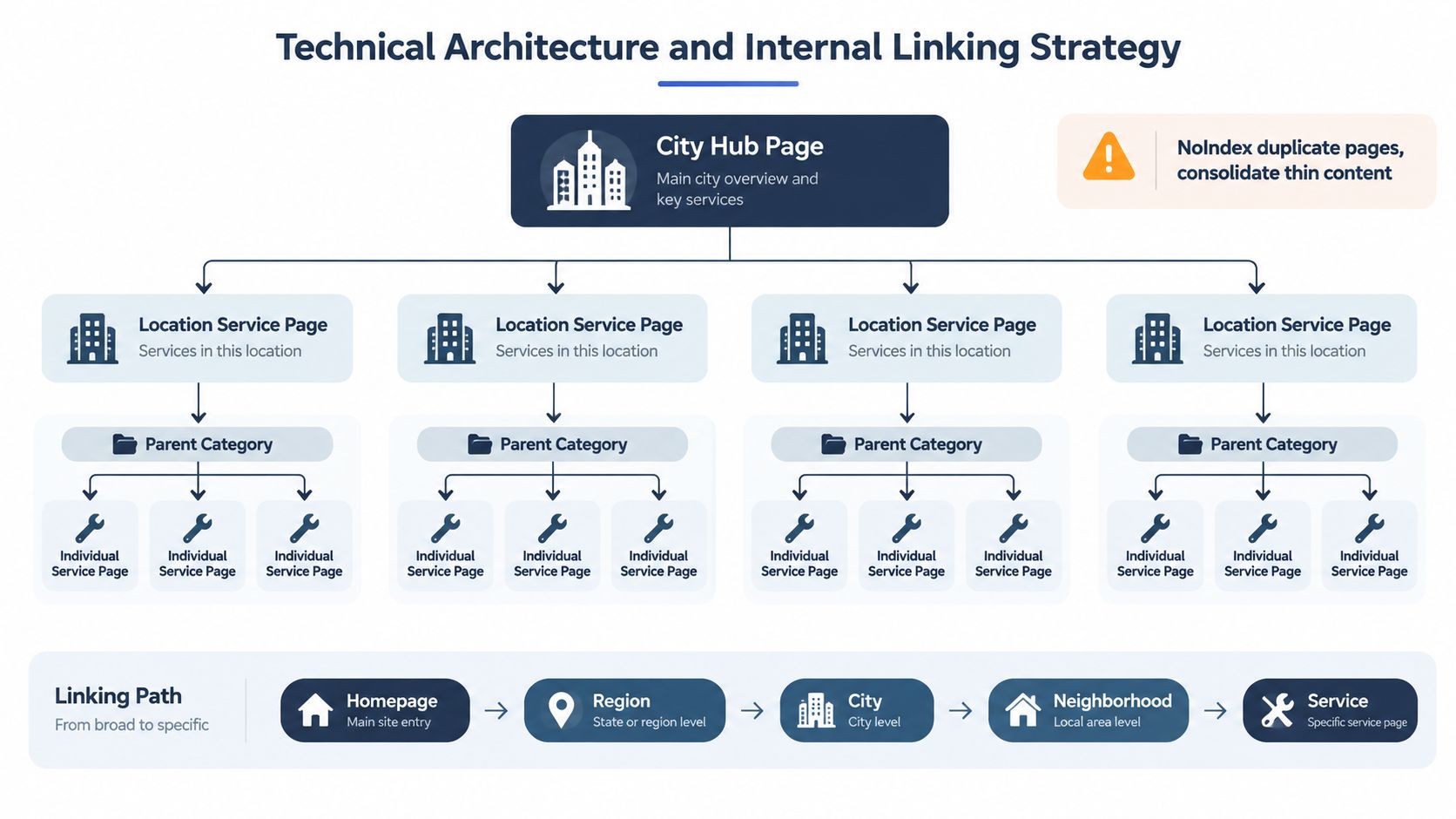
Scaling local pages across multiple locations only works when the site structure is disciplined. For most multi-location brands, a location hub and spoke structure is the cleanest model. The hub sets the regional or category context, and the child pages handle city or branch intent. That gives search engines a clearer crawl path and gives users a more predictable route through the site.
Build for indexation before scale
The strongest rollout starts with a location hub, then the highest-value city pages as children of that hub, then broader expansion only after indexation shows up in Search Console. The key point is simple, an unindexed page cannot rank.
That warning matters because too many near-identical pages create indexation noise. Search engines are left sorting out which URL deserves visibility, while the team is left with unstable results and little diagnostic clarity. A phased launch lets you confirm whether a page is being crawled, indexed, and queried before adding more locations.
Internal links need to match the hierarchy. The homepage should point to the region or hub, the hub should point to the city pages, and the city pages should point to relevant services. That path helps users and crawlers move through the site in the same way, and it keeps authority from getting stranded on isolated pages.
Teams also need a clear technical SEO checklist for crawl, indexation, and page relationships, and Amax Marketing's technical SEO guide is a useful reference alongside a local rollout plan.
Avoid thin pages and duplicate traps
The biggest rollout mistake is treating every branch as page-worthy before the site has enough local evidence to support it. Thin pages are hard to defend, especially when the only visible difference is a place name swap. Fewer pages with stronger local proof usually perform better than a large set of weak variants.
Technical reality: a page that cannot be found, indexed, and differentiated is not a growth asset, it is a maintenance liability.
Canonicalisation also needs attention when location pages overlap with category pages, service pages, or filtered views. The aim is to stop accidental duplication while keeping the primary local page indexable and internally supported. Consolidate overlapping filtered URLs into the primary local page and 301 the variants rather than trying to preserve every version.
Measuring Local Performance and Scaling Safely
A local page should be judged by whether it helps the business get chosen, not by traffic alone. Page-level Search Console data shows which queries are earning impressions and clicks for each URL, while geo-grid rank tracking shows how visibility shifts across the catchment area rather than at one arbitrary point. That pairing is more useful than a single rank snapshot, because local visibility is rarely even.
The KPI framework that reflects reality
| Metric Category | Specific KPI | Primary Tool |
|---|---|---|
| Visibility | Page-level query impressions | Google Search Console |
| Visibility | Page-level query clicks | Google Search Console |
| Local coverage | Catchment-level ranking variation | Geo-grid rank tracking |
| Engagement | Click-to-call actions | Google Business Profile |
| Engagement | Direction requests | Google Business Profile |
| Lead generation | Local form fills | Web analytics or CRM |
| Quality control | Indexed status by URL | Google Search Console |
The point is to connect page performance with real local behaviour. If a page draws clicks but produces no calls or forms, the message or CTA is probably weak. If it performs well in some postcode clusters and poorly in others, the local relevance may be too broad or the service area may be unclear.
For teams that need cleaner reporting loops, Amax Marketing's SEO analytics guide is a useful reference.
Scaling without degrading quality
Growth needs measurement gates, not just more URLs. Only greenlight a new location page once the hub sibling has shown 30+ days of indexed impressions in Search Console and at least one tracked call or form fill. That gives you a real signal that the template can earn visibility and convert before you copy it to the next branch.
The safest rule is to protect relevance at each step. If a new location cannot support its own local proof, service detail, and contact logic, fold it into an existing hub instead of publishing a weak standalone page. That trade-off matters most for brands with overlapping territories, where one page can serve a wider area better than several thin versions.
Common Local SEO Mistakes and Final Takeaways
Local landing pages rarely fail because a city name is missing. They fail when the page feels copied, the contact path is unclear, or its business information conflicts with the Google Business Profile. Those weaknesses reduce trust for visitors and can limit the page's value in map results and AI-generated discovery.
What to stop doing
Repeated city substitutions, duplicated FAQs, and generic testimonials produce pages with little branch-level value. A visitor should find evidence about the specific location, such as its services, team, service area, or customer experience. Without that proof, the page adds little beyond what a map result or AI summary already provides.
Keep the next action visible on mobile. Calling, requesting directions, or sending a short form should not require a visitor to work through several paragraphs of generic copy. Local intent often carries urgency, so unnecessary friction can turn a qualified visit into a lost enquiry.
Business details require ongoing ownership. Incorrect hours, an old phone number, or a previous address can damage confidence quickly. The page, profile, and other public listings must reflect the current operation.
The best local page feels obvious to the right customer. It confirms they are in the right place, then makes the next step easy.
The five-point local page audit
- Local proof: real branch details, named people, and area-specific testimonials.
- Visibility alignment: the page, the GBP, and citations present consistent information.
- Mobile clarity: contact details, directions, and CTAs are easy to find.
- Indexation health: the page is indexed and attracting relevant queries.
- Content quality: no filler, duplicated city swaps, or unsupported promises.
A strong local page serves two jobs. It supports discovery through the Google Business Profile and wider search results, while giving visitors enough local evidence to convert. Ranking for a place name is only the starting point.
For cleaner reporting loops, how to build SEO reporting loops from analytics data explains how analytics can connect visibility with business outcomes.
Amax Marketing builds local landing pages, technical SEO structures, and Google Business Profile support for multi-location businesses. To turn local search into measurable enquiries, visit Amax Marketing and ask for a complimentary marketing audit.