


Most lists of the best guest posting sites reward the wrong thing: the number of placements available. A publication that accepts almost anything isn't necessarily useful. If readers ignore its articles, or its main business is selling links, a placement can waste budget and weaken a brand's credibility.
The better test is audience relevance, editorial standard and link quality. For a self-storage operator, an article reaching local business owners could matter more than a generic marketing post on a supposedly authoritative website. For an e-commerce brand, useful buying or operational advice needs readers who actually influence purchasing decisions.
That distinction matters in a busy information market. Ofcom's Online Nation report found that 71% of UK adult internet users had searched for information related to a potential purchase during the previous three months. Guest content should help those readers make better decisions, not interrupt them with an agency sales pitch.
A publication belongs on a shortlist because its readers need the contributor's expertise, not because someone can arrange a backlink.
The options below include a publishing tool and seven publications. They aren't interchangeable: some welcome expert contributions, some require an industry-level argument, and others offer editorial contact rather than a standing guest-post programme. None should be treated as a guaranteed placement.
Table of Contents
- 1. Outrank
- 2. SmallBusiness.co.uk
- 3. Startups.co.uk
- 4. Creative.onl
- 5. techUK
- 6. Just Entrepreneurs
- 7. SME Today
- 8. UKTN
- How the eight guest posting options compare on audience, submission route and paid options
- Pitch Where Your Expertise Earns the Placement
1. Outrank
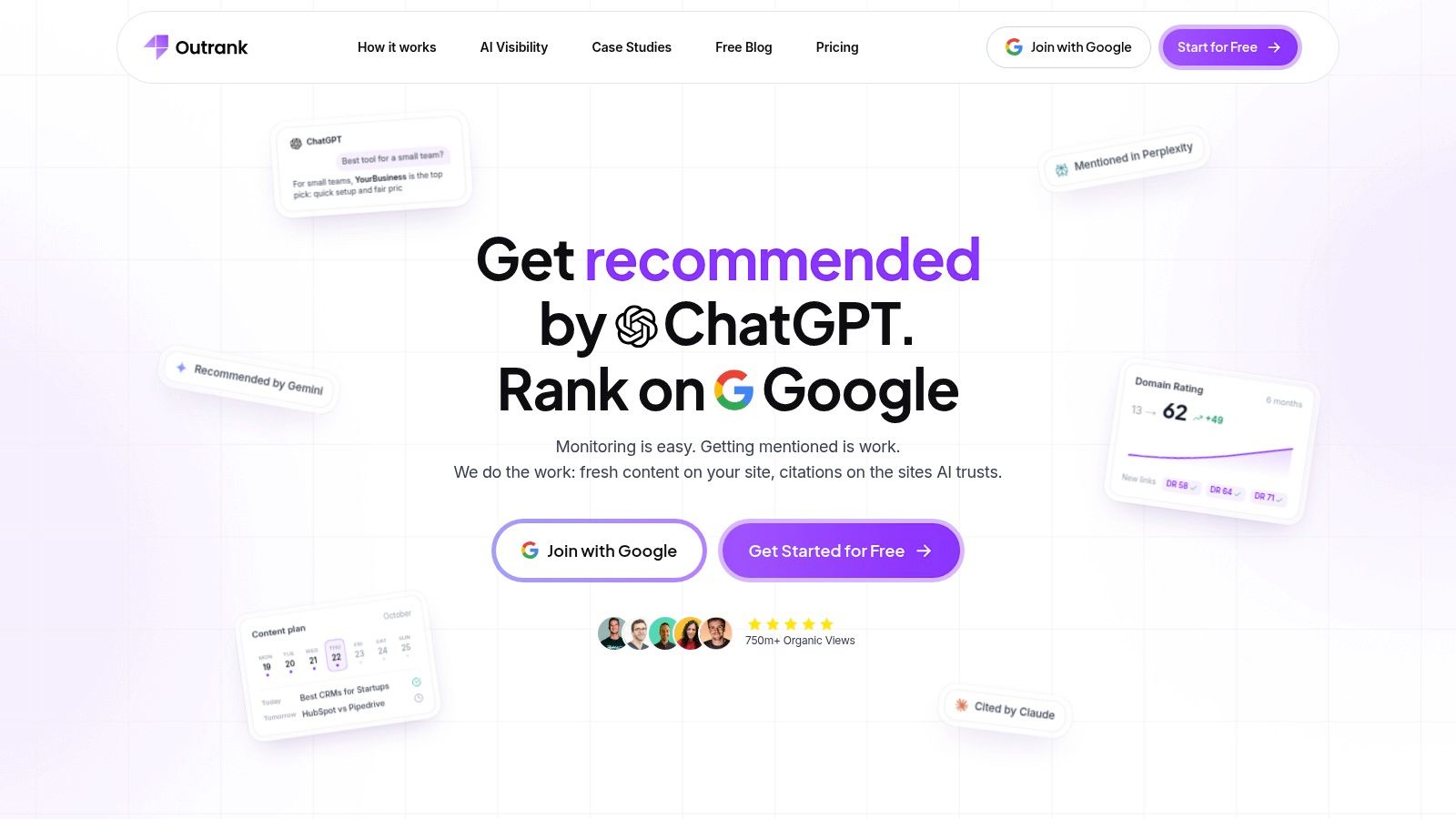
Outrank is a content-production and publishing platform, not a UK editorial publication. Its best guest posting sites marketplace is a starting point for investigating publisher opportunities, but the platform and each prospective publisher need separate assessments.
Outrank's broader toolkit combines AI-assisted keyword research, article generation, brand-voice customisation and on-brand images. Publishing integrations with WordPress, Webflow and Notion can reduce the copying, formatting and uploading involved in maintaining a company's own content programme.
That makes it relevant to a marketing manager who needs both a stronger resource library and material to support outreach. It doesn't remove the harder editorial work: finding an original argument, checking evidence and matching a publisher's readers.
Where the Tool Helps, and Where It Doesn't
- Audience relevance: Evaluate the individual publisher, not Outrank's overall offering. A candidate needs a credible connection to UK buyers, the business's sector and the proposed topic.
- Editorial standard: AI rewrites and content customisation can help prepare drafts. A subject specialist still needs to verify claims, replace generic passages and check whether the target outlet permits AI-assisted material.
- Link quality: Neither generated content nor a marketplace listing establishes that a link is editorially earned. The publisher's commercial terms, disclosure practices and control over links remain decisive.
Collaboration features and API integrations are useful when several people manage production. The trade-off is that easier publishing can also make it easier to release interchangeable articles that offer editors nothing distinctive.
An analysis cited by Whito examined 257,267 marketplace sites and classified 96.2% as low quality. That finding isn't an assessment of Outrank; it explains why marketplace discovery should lead to manual review, not automatic purchasing.
Pitch to avoid: A generated article offered solely in exchange for a commercial backlink. Outrank isn't the editor, and any rejection policy belongs to the receiving publisher.
Best fit: Teams that need help organising and producing content, while retaining human editorial control. It's a weaker choice when the expectation is that software alone will secure credible UK coverage.
2. SmallBusiness.co.uk
A small-business owner deciding whether an agency is delivering value needs more than another explanation of SEO. A practical article on separating enquiries from vanity metrics gives that reader a decision-making framework. That's the kind of useful, independent contribution suited to SmallBusiness.co.uk.
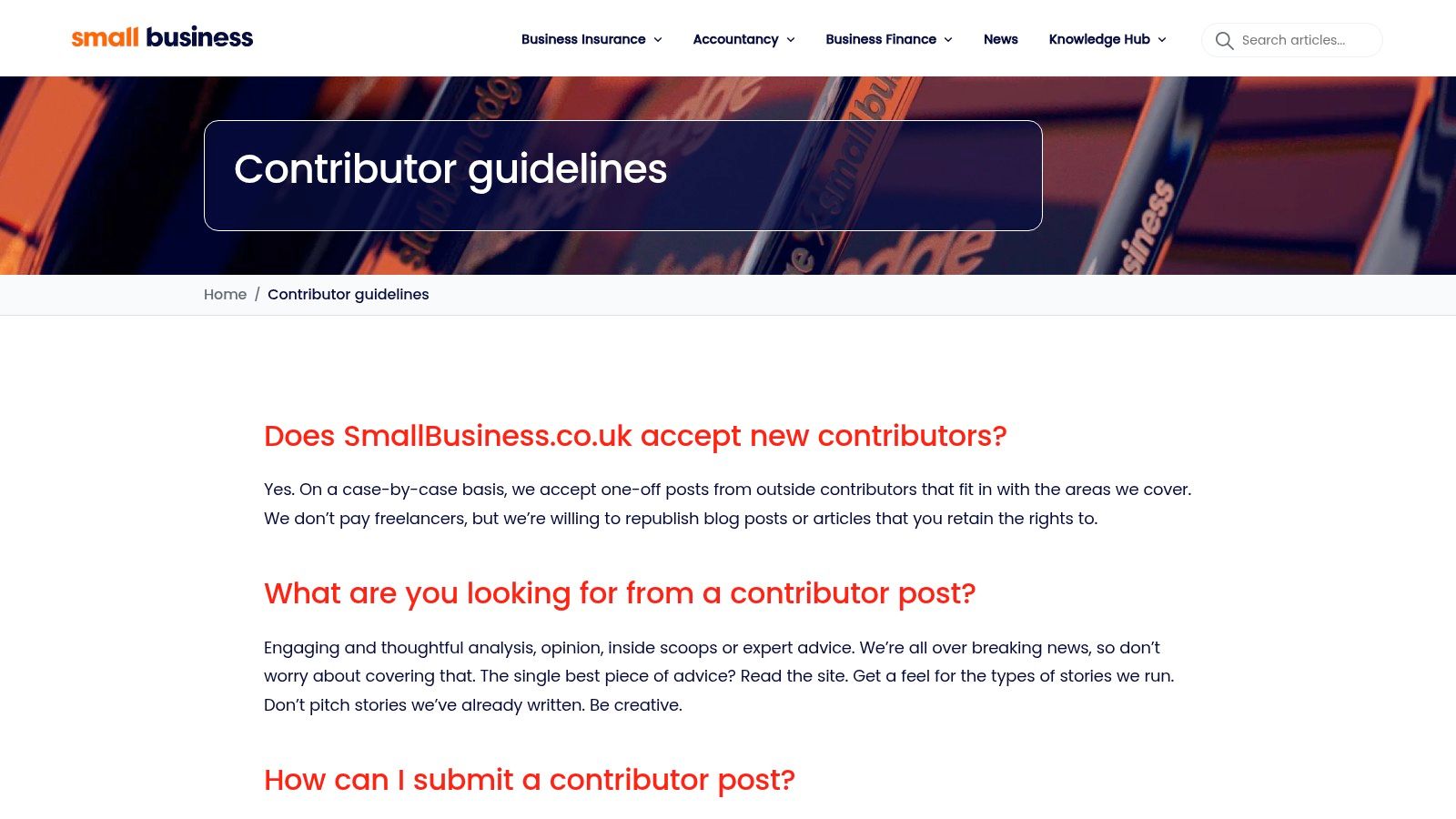
Its contributor guidelines describe a selective editorial route rather than an open publishing service. Pitches should include the proposed idea, relevant credentials, writing samples and the intended section. Acceptance isn't guaranteed, and editors retain control over presentation.
The Editorial Fit
Audience relevance is strongest for advice addressing the realities of running a UK small business: limited budgets, competing priorities and uncertainty about specialist services. A focused contribution on measuring local marketing performance fits better than a broad article about the importance of digital visibility.
Editorial standard depends on useful facts, independent judgement and a clear practical outcome. The contributor should explain what a business owner can inspect in Google Analytics or Search Console, where interpretation gets difficult and which conclusions the evidence doesn't support.
Link quality is subordinate to that editorial purpose. A useful resource may support an argument, but the article shouldn't depend on a particular commercial anchor or destination.
- Pitch welcomed: Evidence-led advice on assessing marketing performance before renewing an agency contract.
- Pitch rejected: Promotional copy, keyword marketing and paid-link approaches.
- Main trade-off: Relevant SME exposure comes with unpaid contribution, editorial discretion and no promise of publication.
Amax Marketing's guide to small-business digital marketing provides a relevant starting point for identifying owner-level questions. A submission still needs a fresh argument rather than a repackaged service page.
3. Startups.co.uk
Startups.co.uk suits founder-facing judgement more than routine agency advice. A contribution needs to help someone make a growth decision, such as whether to invest in paid acquisition before fixing an unreliable enquiry process.
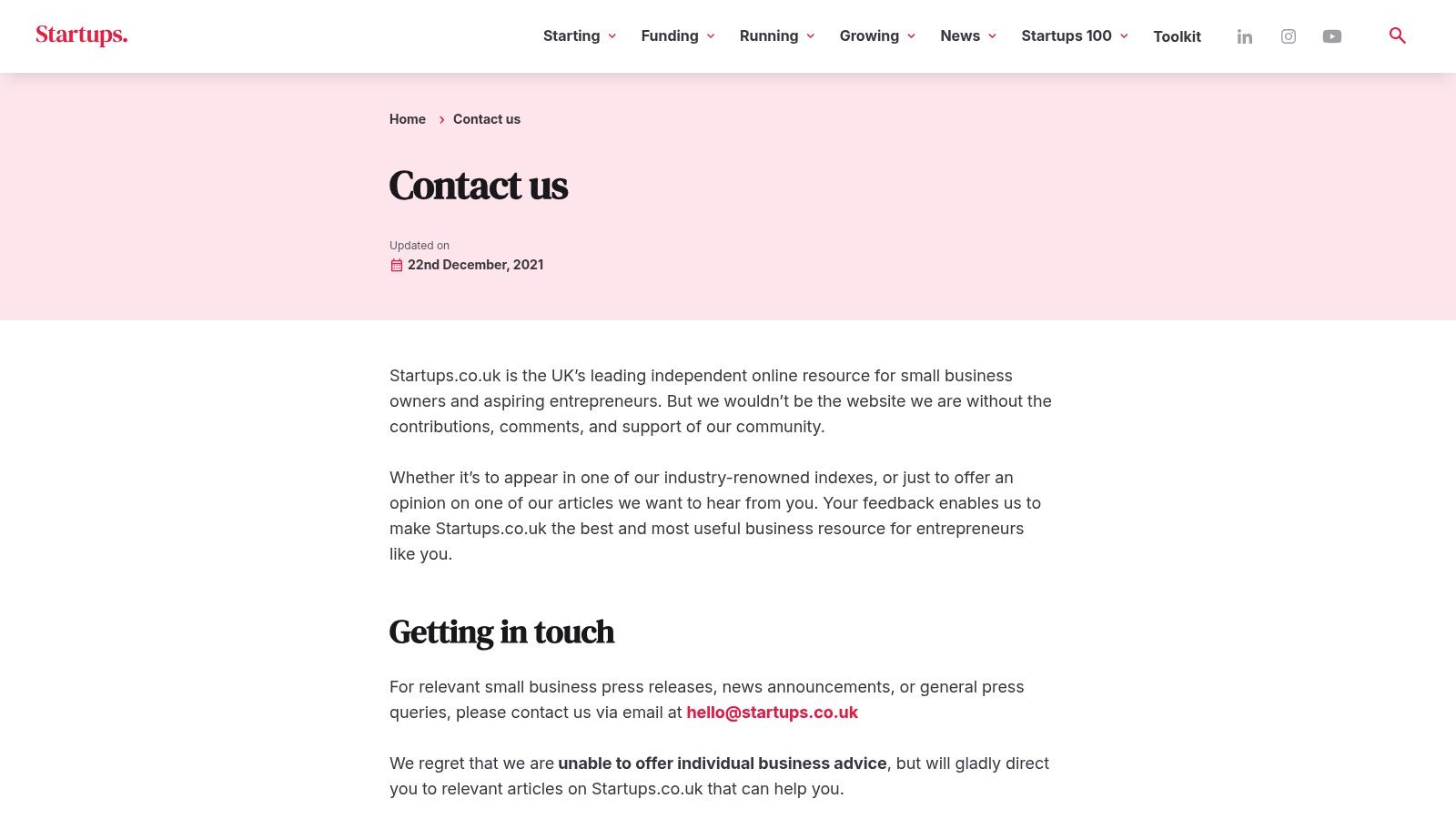
The publication's contact guidance welcomes thought-leadership pitches from business experts and founders while separating editorial and commercial enquiries. It explicitly doesn't accept paid guest posts or link insertions. That distinction should shape the first email, not become a negotiation after an editor expresses interest.
An editorial pitch should remain worth publishing even if every link to the contributor's business disappears.
For audience relevance, the strongest angles reflect startup constraints. Founders need advice on sequencing work, validating demand and understanding acquisition costs, rather than recommendations that assume an established marketing department.
For editorial standard, an expert should take a defensible position and explain its limits. A piece arguing that a startup should repair conversion tracking before increasing advertising spend needs concrete diagnostic steps, not an unsupported claim that every business has the same problem.
For link quality, an earned mention is a possible outcome, not a condition of submission. Commercial visibility belongs in the publication's separate commercial conversation.
A Stronger Founder Pitch
A proposed article could explain how a startup distinguishes weak demand from a broken landing-page journey. It could cover form testing, source attribution, sales feedback and the difference between enquiries and qualified opportunities.
The startup digital marketing resource offers related planning context, but an external contribution needs an independent editorial purpose.
Pitch rejected: An advert presented as thought leadership, a paid guest-post request or a demand for a backlink. The trade-off is clear: strong founder relevance, but no entitlement to coverage or link placement.
4. Creative.onl
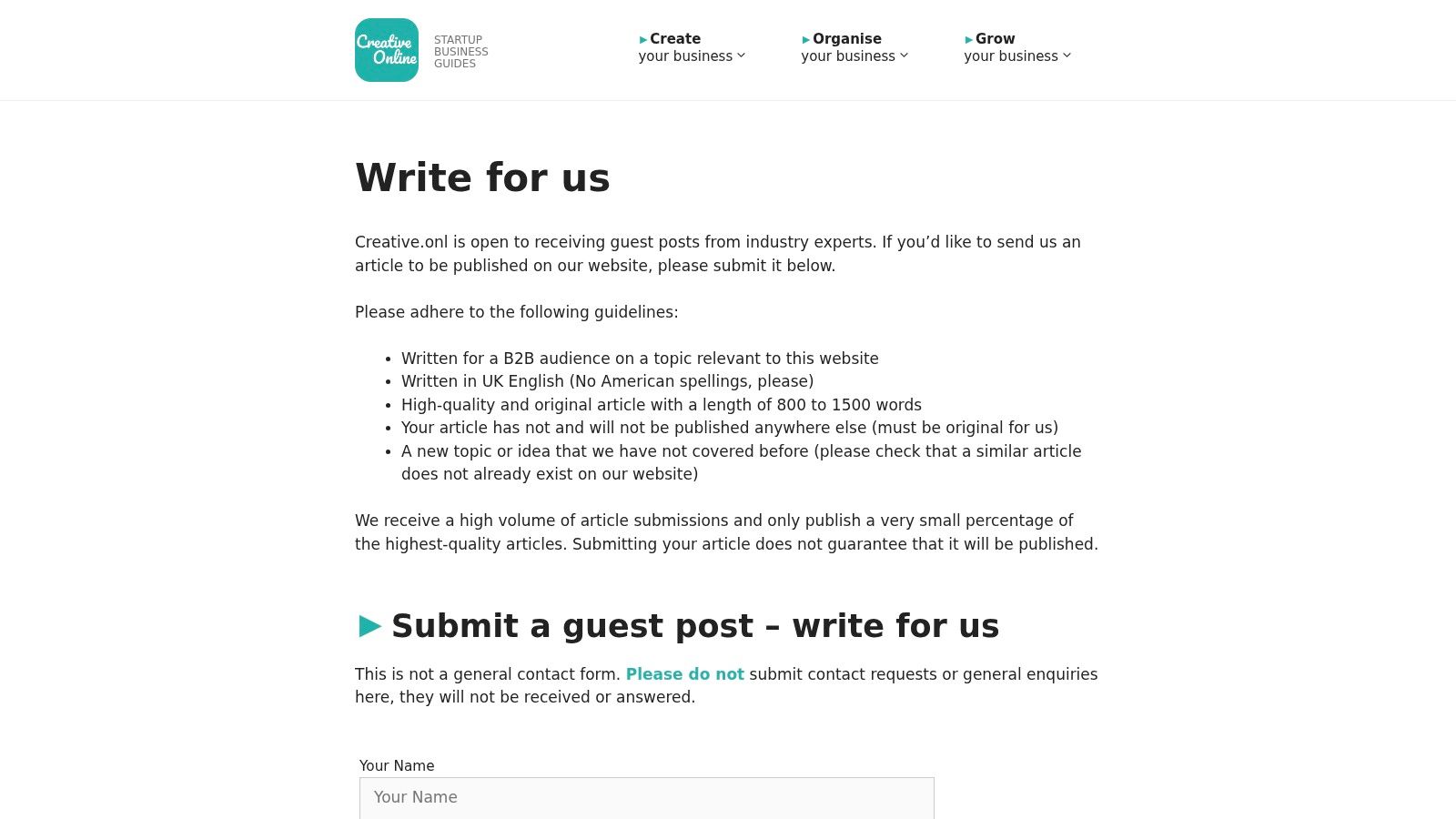
Creative.onl offers a more explicit guest-submission process than outlets that only provide an editorial email address. Its submission requirements call for original, unpublished material relevant to a B2B audience, written in UK English.
That clarity helps contributors assess fit before drafting. It doesn't make acceptance automatic: a familiar subject still needs a useful distinction from the publication's existing coverage.
- Audience relevance: Marketing, web and business expertise can fit when it helps business readers make a practical decision.
- Editorial standard: Originality matters at the argument level, not just the wording. Rewriting an existing company blog post doesn't create a new contribution.
- Link quality: Supporting resources should substantiate the article. A commercial destination shouldn't dictate its structure or conclusion.
Give the Editor a Usable Framework
A promising pitch might explain how a service business decides which website pages need rebuilding before commissioning more blog content. It could distinguish outdated advice, overlapping search intent, weak service explanations and pages that attract visitors but don't support enquiries.
That approach gives an editor something more useful than a generic list of content-marketing benefits. It also creates room for specific examples without turning the article into a company case study.
Amax Marketing audits thin content, removes dead weight and rebuilds sites around topics the client should own. Its resource on blogging for a business provides related context, while a guest submission should develop a distinct framework for Creative.onl's readers.
Pitch to avoid: Recycled material or a topic already covered without a meaningful new angle. A narrowly defined B2B problem is a stronger proposition than a broad promise to improve online visibility.
Want a free audit like this for your own site?
We'll show you exactly what's holding your rankings and conversions back. No sales pitch.
Get My Free AuditThe main trade-off is preparation time. Clear guidelines reduce uncertainty, but contributors still need to check existing coverage and demonstrate expertise before investing in a full draft.
5. techUK
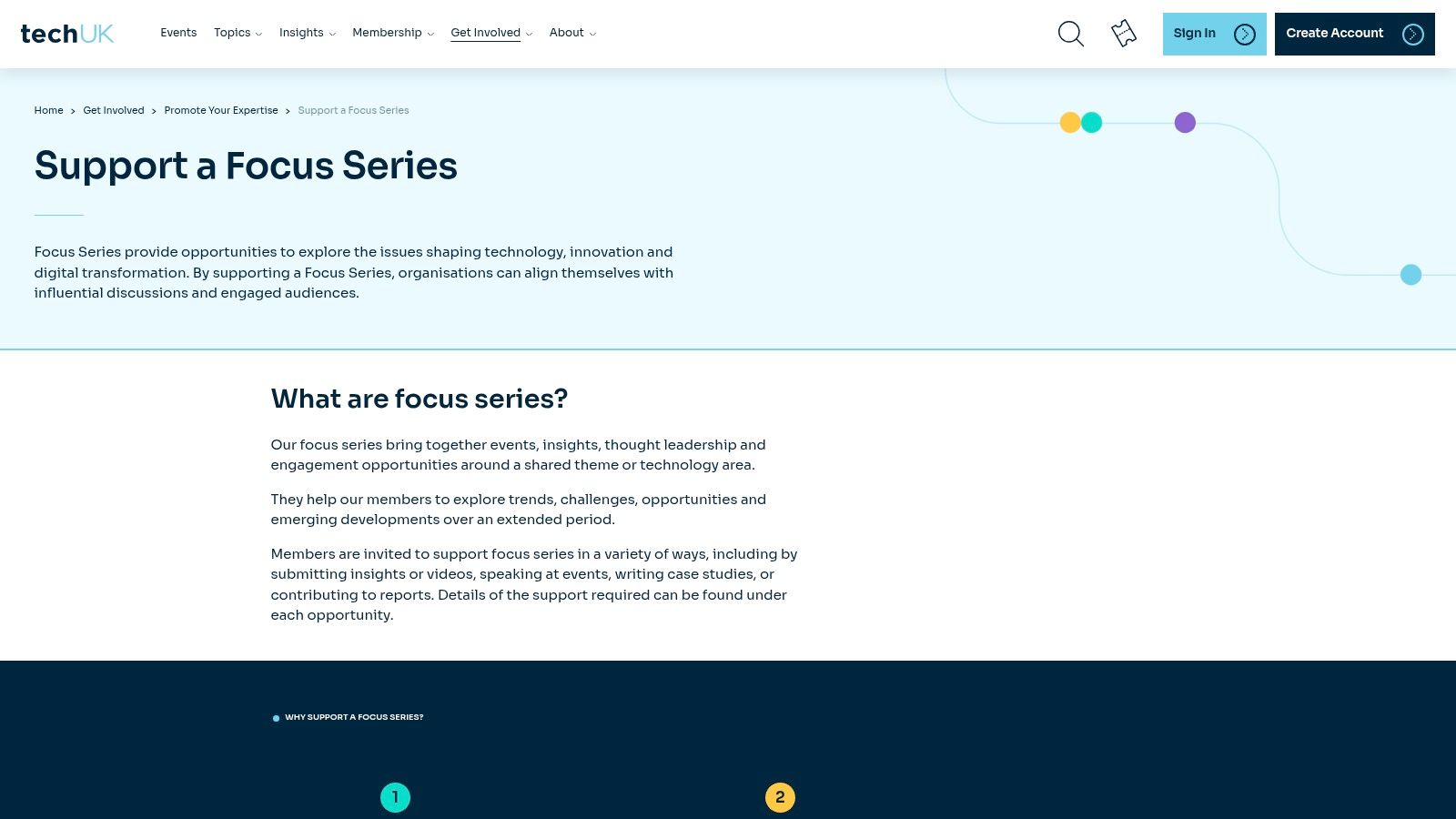
A routine article about improving search rankings is unlikely to be the strongest proposition for techUK. A specific argument about technology adoption, data quality or the operational consequences of digital change is closer to the brief.
As a technology trade association, techUK offers guest-insight opportunities connected to industry discussion. Its focus-series guidance is the appropriate place to establish the current theme, format and participation requirements before developing a pitch.
Industry Relevance Comes First
Audience relevance requires a perspective that extends beyond the contributor's own service. A self-storage technology article, for example, could explore how online booking, availability information and customer data affect operational decisions. A list of reasons to buy storage software would be a weaker fit.
Editorial standard means a named spokesperson, a concise argument and clear subheadings. The contributor should distinguish evidence from opinion and explain what other UK technology businesses can learn from the issue.
Link quality depends on editorial usefulness rather than the commercial value of a destination. Programme participation or membership shouldn't be mistaken for a guarantee that a particular article or link will be accepted.
Submission safeguard: techUK's guidance excludes content that appears AI-written. Human expertise needs to shape the argument, not merely tidy the sentences.
Pitch rejected: Sales-led copy, routine promotional case studies and material that appears AI-written. Contributors should also avoid dressing a narrow agency service as an industry-wide development.
The benefit is a focused technology environment and, where the opportunity includes it, wider campaign visibility. The limitation is equally important: this isn't a general-purpose destination for every SME marketing article.
A credible contribution needs a technology-sector reason to exist. Without that, a small-business publication is likely to offer a better editorial match.
6. Just Entrepreneurs
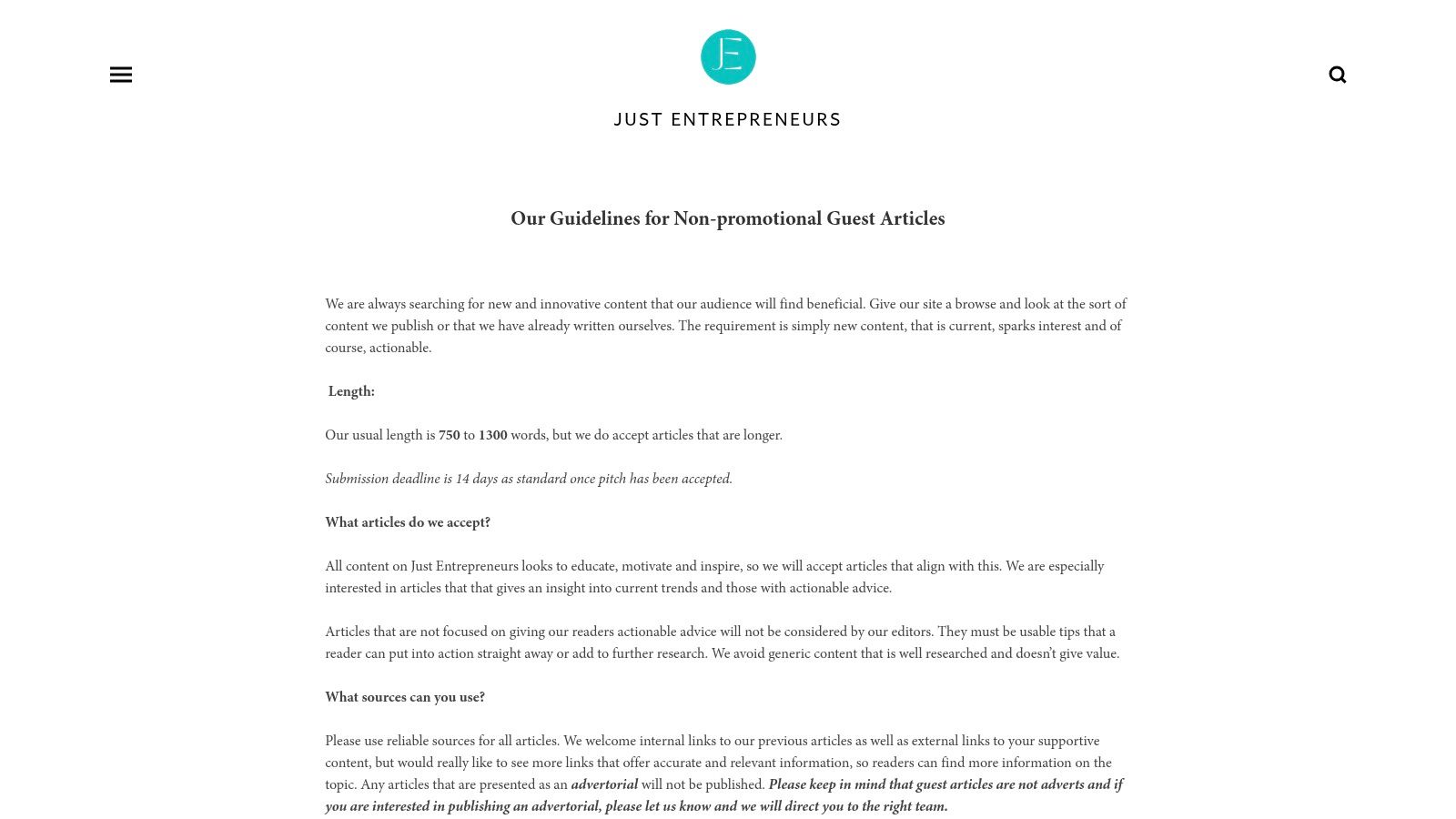
Just Entrepreneurs is a poor choice for a backlink-first campaign and a more plausible choice for useful founder education. Its contributor guidance distinguishes guest articles from advertorials and prohibits external links to contributors' products or websites in the article body.
That restriction is a useful filter. If the contribution stops making commercial sense without a body link, the publication probably doesn't match the campaign's objective.
Authority Without a Sales Exit
For audience relevance, topics should address problems entrepreneurs and business owners recognise. A contribution explaining what to fix before increasing paid-media spending could cover broken forms, slow mobile pages, unclear offers and inconsistent lead handling.
For editorial standard, the article needs original, researched advice that informs rather than advertises. Concrete diagnostic steps matter more than an impressive author biography. The editor can review and revise the submission, so the contributor needs flexibility about wording and presentation.
For link quality, the body-link restriction should be treated as a rule, not an obstacle to work around. This is an opportunity to assess on readership and reputation rather than a promised SEO asset.
- Pitch welcomed: Practical guidance that helps founders diagnose a business problem independently.
- Pitch rejected: Product promotion, contributor website links in the body and calls to action.
- Main trade-off: The publication may suit expert visibility while remaining unsuitable for direct referral acquisition.
Brand context still deserves attention. Ofcom's Communications Market Report found that 42% of UK adult internet users had experienced self-identified misinformation during a four-week period. That finding doesn't establish this outlet's credibility, but it reinforces the need to inspect authorship, accuracy and surrounding content before associating a business with any publication.
7. SME Today
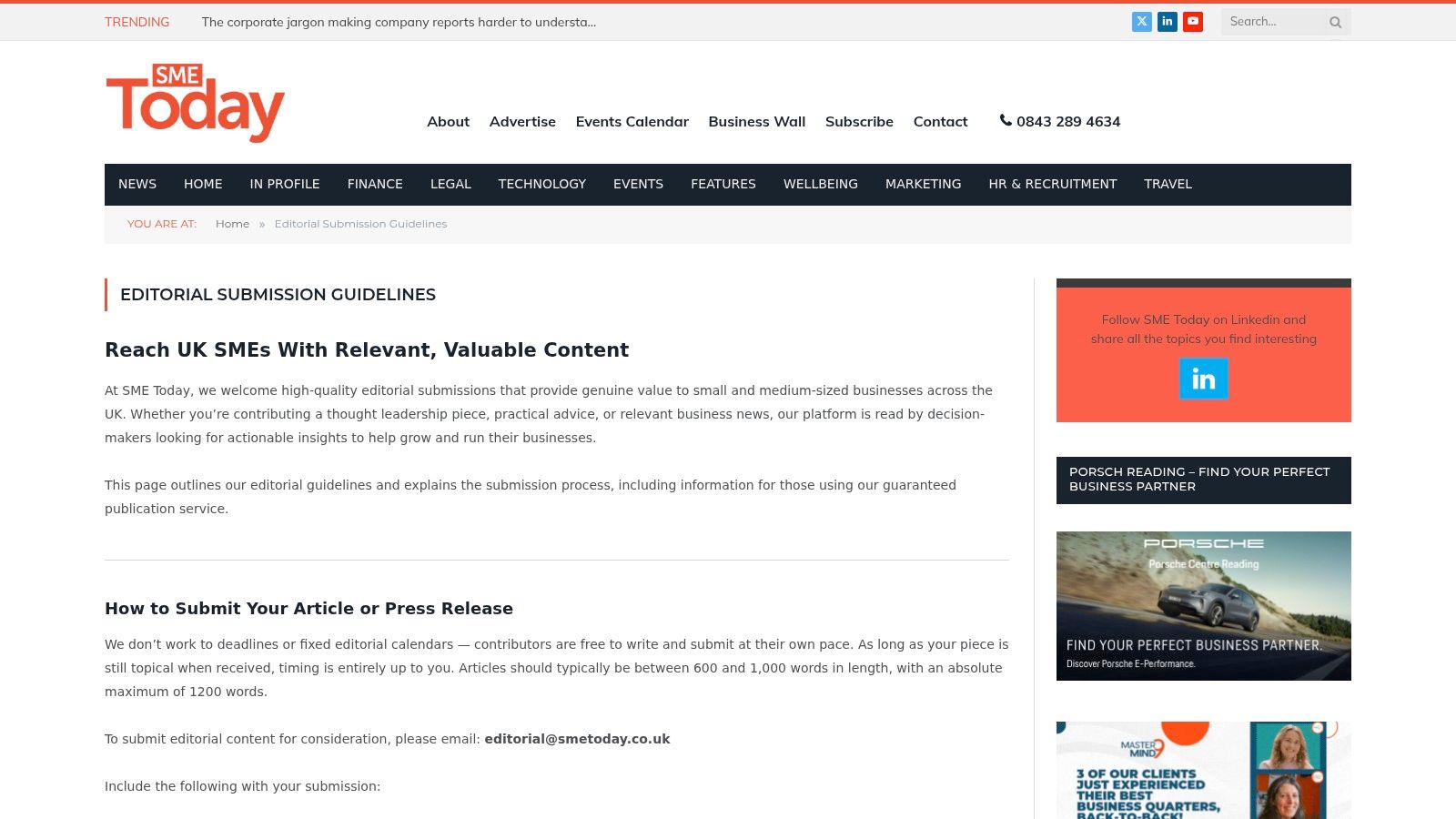
SME Today makes an important distinction visible: editorial consideration isn't the same product as guaranteed publication. Its editorial submission guidelines explain the editorial route alongside separate guaranteed-publication options.
A business should choose between those objectives before submitting. An independent article offered for editorial judgement and a paid visibility package require different expectations, measurement and disclosure.
Audience relevance is strongest for practical UK SME advice. Local-industry experience can support a useful contribution, provided the lessons apply beyond the author's business.
Editorial standard means an article that helps readers act. A piece on evaluating local expansion could explain how managers assess existing enquiries, service coverage and operational capacity before commissioning location pages.
Keep Editorial and Commercial Terms Separate
Link quality follows the route taken. An editor-controlled reference within useful coverage is different from a link included in a purchased package. Neither a familiar masthead nor guaranteed publication should obscure that distinction.
Google's guidance on link tagging and link spam warns about campaigns designed primarily to pass ranking credit and explains the need to qualify commercial links appropriately. Payment for visibility shouldn't be treated as a purchase of ranking benefit.
- Pitch welcomed: Practical advice, thought leadership or relevant business news with a clear SME benefit.
- Pitch to avoid: A submission presented as independent editorial while demanding guaranteed publication or a ranking-passing link.
- Main trade-off: The editorial route offers consideration, not certainty; paid options offer a different kind of visibility.
The distinction also affects reporting. Paid exposure should be judged against its agreed audience and commercial outcomes. Earned coverage should be recorded as editorial coverage, without implying that acceptance guarantees enquiries or improved rankings.
8. UKTN
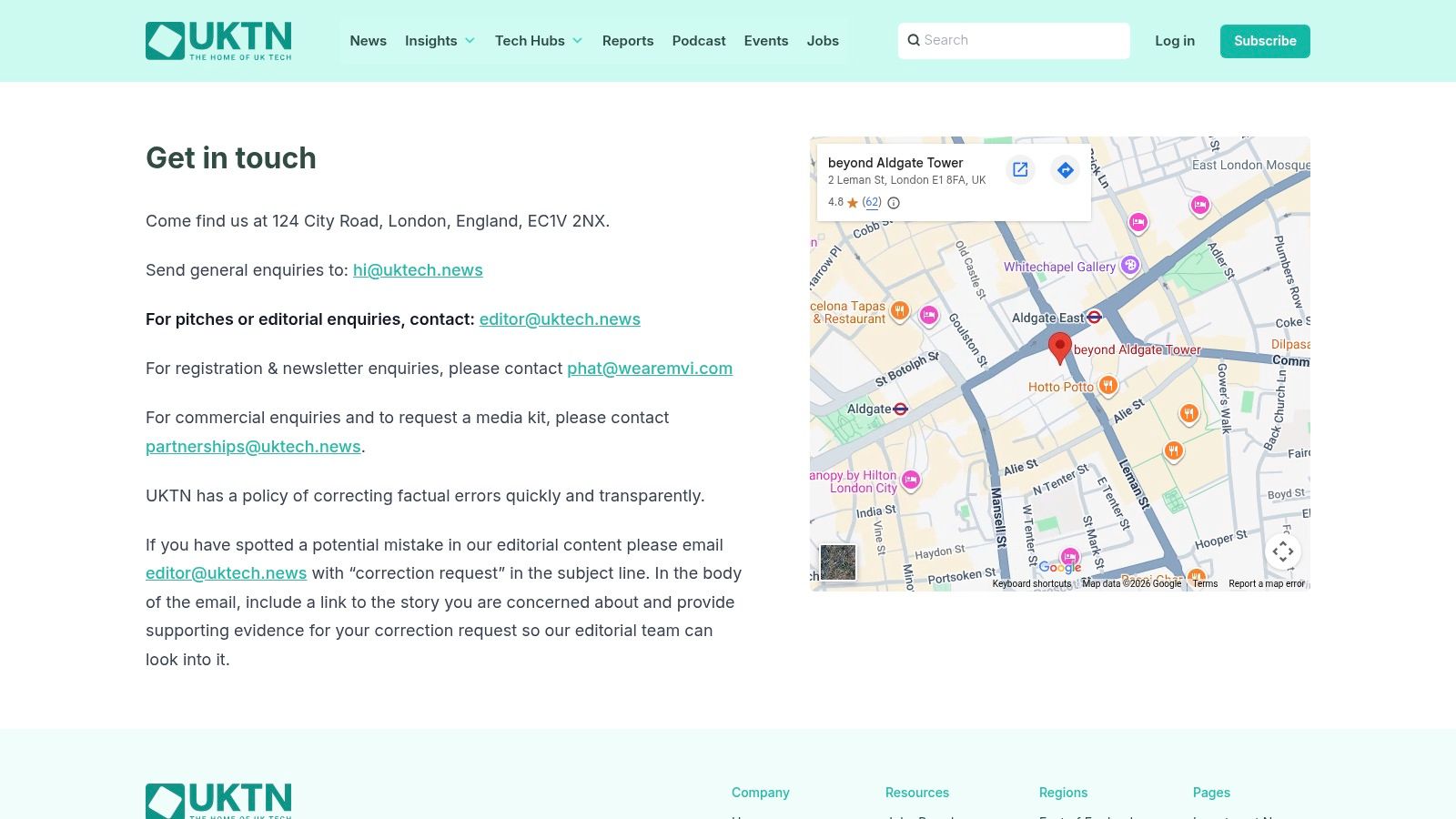
UKTN belongs on a technology outreach shortlist, but not on a list of guaranteed guest-article destinations. Its contact page provides a route for editorial pitches and separates those enquiries from commercial and media-kit requests.
A distinctive UK technology story is the starting point. A generic agency article about SEO usually lacks the sector relevance needed to justify a newsroom's attention.
Pitch a Story, Not an Available Article
- Audience relevance: The proposed contribution needs a genuine UK technology or digital-business angle. Technology buyers, founders and sector participants should have a reason to care.
- Editorial standard: Original evidence, a defensible argument or informed expert commentary offers a stronger proposition than recycled advice.
- Link quality: Any reference should follow from the reporting or argument. The contact route doesn't promise guest-post acceptance, publication or a backlink.
Say a business has permission to share carefully documented findings about problems implementing online booking across locations. The pitch could explain the evidence, its limitations and why the issue matters beyond that company. Without those elements, it risks being an ordinary product announcement.
Pitch to avoid: A routine SEO how-to, an unsupported trend claim or a link-insertion request. These are poor editorial fits, rather than published rejection rules inferred from the existence of a contact page.
The surrounding reader experience also warrants inspection. A study reported by Press Gazette found that 73% of readers trusted publishers operating in low-ad environments, compared with 56% in high-ad environments. That isn't a rating of UKTN; it supports checking advertising clutter alongside editorial relevance.
The trade-off is a higher story threshold. A credible technology angle may justify outreach, but an available article alone doesn't.
How the eight guest posting options compare on audience, submission route and paid options
Seven of these are UK publications. Outrank is the exception: a platform and publisher marketplace rather than an editorial outlet, so access is bought rather than argued for.
| Item | Audience | Submission Route | Paid Options |
|---|---|---|---|
| Outrank | Businesses seeking SEO content and publishers | Platform and publisher marketplace | Placements bought through the marketplace |
| SmallBusiness.co.uk | UK small-business readers | Email pitch with idea, credentials, samples and a suggested section | No; contributors are unpaid |
| Startups.co.uk | UK startups and growing businesses | Thought-leadership pitch via editorial contact | Does not accept paid guest posts or link insertions |
| Creative.onl | B2B readers | Guest-submission process | No advertised paid-placement route |
| techUK | UK technology sector | Guest insights or focus-series opportunities | Some opportunities may involve programmes or membership |
| Just Entrepreneurs | Entrepreneurs and business owners | Email or submission form | Advertorials are separate from guest articles |
| SME Today | UK SMEs | Editorial submission | Paid guaranteed-publication packages available |
| UKTN | UK technology and digital-business readers | Editorial pitch via contact page | Commercial enquiries handled separately |
Every row was judged on the same three criteria: audience relevance, editorial standard and link quality. The practical trade-off sits at either end of the table. Unpaid routes make the pitch do all the work, so credentials and a sharp idea carry it. A paid or guaranteed route buys placement rather than editorial weight.
Pitch Where Your Expertise Earns the Placement
The best guest posting sites aren't necessarily the easiest places to publish. They're the publications where a business can contribute something useful to the right readers under clear editorial rules.
A focused shortlist beats indiscriminate outreach. An SME adviser might prioritise SmallBusiness.co.uk or SME Today, while a founder-facing argument could suit Startups.co.uk or Just Entrepreneurs. A technology-led story may justify approaching techUK or UKTN, but the same generic pitch shouldn't go to all of them.
Before drafting, the contributor should read recent coverage and identify a specific gap. The pitch needs a proposed angle, a clear reader benefit, relevant credentials and a concise account of the evidence available. Editors shouldn't have to extract the useful idea from a company introduction.
Agree on the Purpose Before Measuring Results
Campaign reporting should distinguish editorial credibility, audience discovery and commercial response. A relevant mention can be worthwhile without a body link, while a backlink with no relevant readership may contribute little to the business objective.
- Editorial outcome: Record whether the article earned coverage, expert attribution or a useful mention in a relevant publication.
- Audience response: Where links are permitted, use UTM parameters and Google Analytics to assess referral engagement rather than clicks alone.
- Commercial response: Connect enquiries to suitable services, locations and customer needs, using CRM records and postcode information where appropriate.
- Publishing conditions: Record restrictions on links, calls to action, exclusivity and sponsored content before committing production time.
Guaranteed publication is paid visibility. It shouldn't be reported as an editor independently choosing the story.
Amax Marketing doesn't build links from sponsored posts. Its links come from digital PR based on newsworthy stories, data and expert commentary. That approach keeps the case for coverage centred on something an editor can use rather than a placement fee.
The destination website needs attention too. A visitor arriving from credible coverage still needs clear service information, a usable mobile experience and a working enquiry route. More exposure won't repair a confusing offer or unreliable measurement.
Businesses ready to establish that foundation can request Amax Marketing's free website audit covering SEO, speed and user experience. The practical next step is to identify the target services and locations, then use the audit to prioritise website improvements before investing more effort in editorial outreach.