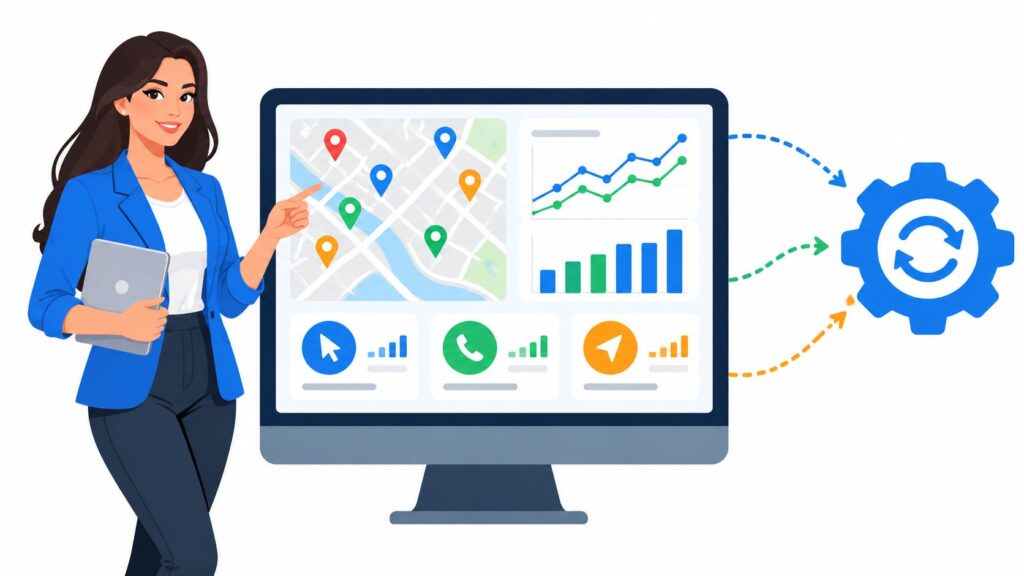

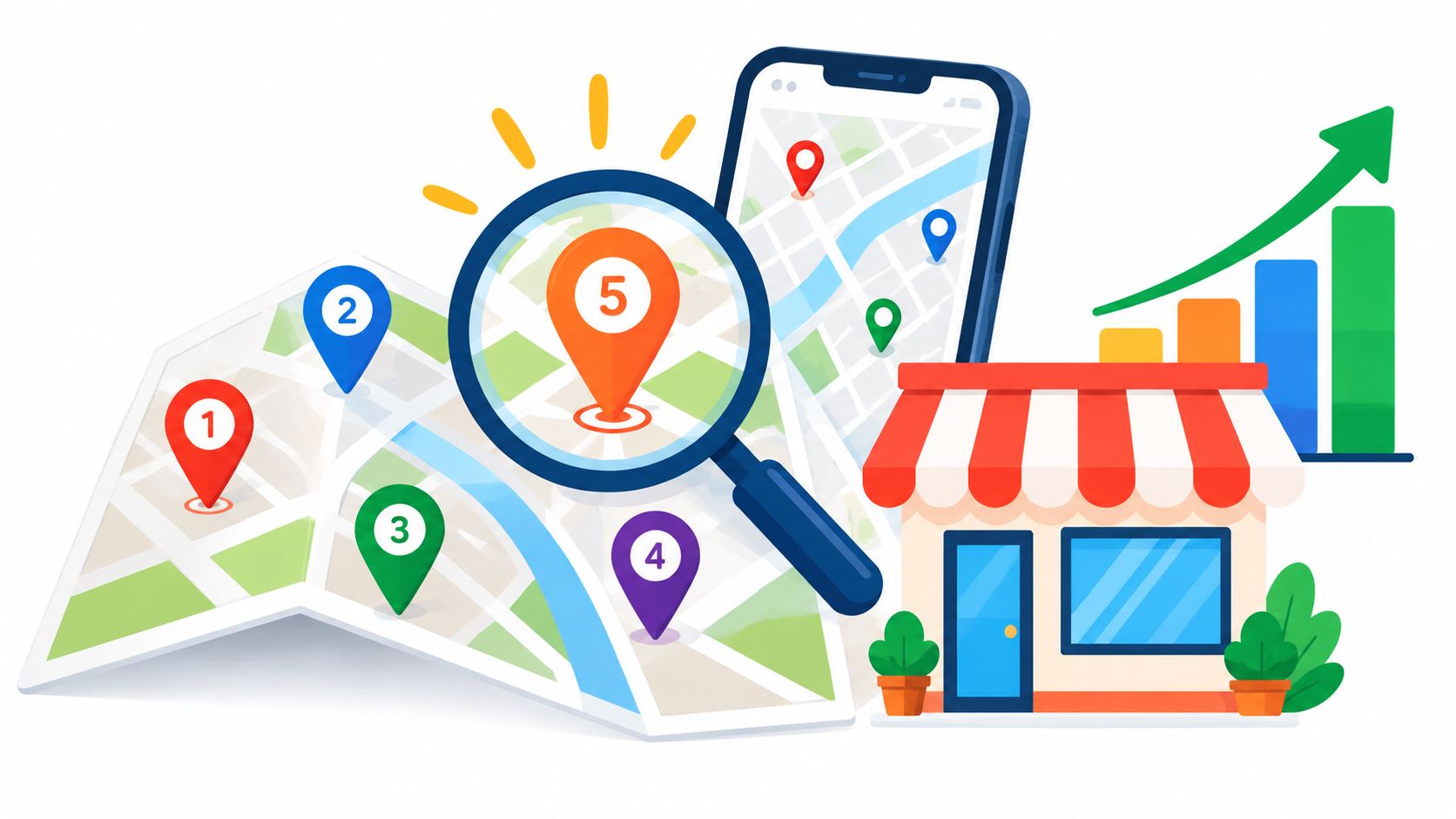
A self-storage operator in Croydon checks Google Maps before opening the facility. One tracker shows position 2, another reports position 6, and the owner's own phone doesn't show the business in the top three at all. All three checks happened within the same hour.
That isn't necessarily a tracking failure. Google local results depend mainly on relevance, distance and prominence, and Google's guidance also confirms that review count and review score influence local ranking. Google Maps ranking guidance for UK businesses makes the important point clear: there isn't one universal position that every searcher sees.
The practical question in 2026 is no longer, “Are we number one on the grid?” It's, “Are the right customers finding the profile, using its actions and becoming enquiries?” WhatsApp integration, the retirement of public Q&A and AI-generated Ask Maps answers have made the local search interface less like a fixed three-pack and more like a collection of discovery and conversion routes.
Why Your Map Rankings Look Different Every Time You Check
Google Maps rank tracking becomes confusing when a business treats every result as a direct measurement of the same thing. A manual phone search, a desktop browser, a geo-grid tool and Google Business Profile insights each describe a different part of the customer journey.
A searcher standing near a Croydon facility may see that business prominently because distance is favourable. A searcher in another part of the borough may see a different set of facilities. A tracker running from fixed coordinates may show the listing at a consistent position, but that position reflects the chosen coordinates, device settings, search environment and scan time.
The local result is no longer just a three-pack
The traditional local pack remains useful, but it's only one visible layer. Google can show map listings, extended local results, profile actions, conversational answers and AI-generated summaries in different combinations. A business may be visible through its profile data or reviews even when a tracker doesn't record a conventional pack position.
Google's recent product direction matters here. Business Messages was deprecated, WhatsApp integration was introduced, public Q&A was removed, and Ask Maps began generating answers from Business Profile information, reviews, photos and web content, as described in this overview of Google Business Profile changes. A static rank report can miss that a customer has found the business through an answer or profile action rather than a traditional listing click.
Practical rule: Treat a map position as a location-specific observation, not as the business's permanent rank.
What should be measured instead
A useful measurement system combines three layers:
- Visibility: grid coverage, local pack presence, competitor entrants and position bands.
- Engagement: website clicks, calls, direction requests, bookings, messages and profile interactions.
- Commercial outcome: qualified enquiries, completed bookings, facility tours and revenue attributed to local discovery.
That approach also explains why a position change may not produce an equivalent change in leads. A business can move upwards in a low-value area, while remaining weak in the postcodes that generate most enquiries. Conversely, a listing can lose a pack position but continue receiving calls through a profile feature or an Ask Maps answer.
The sections that follow separate the three tracking methods, control the variables that distort readings, build a demand-led geo-grid and connect ranking data with first-party actions. The objective isn't to eliminate every fluctuation. It's to make each report useful enough to support a decision.
Three Tracking Methods Worth Your Attention
UK businesses generally need three methods, not one. Manual checks provide context, software provides repeatability and Google Business Profile insights provide first-party action data that a rank tracker cannot reproduce.
Manual checks for occasional reality checks
A manual check is useful when a manager wants to see the actual search experience. Use a fresh incognito window or a browser profile that isn't signed in, search the priority service and location, inspect the local results and record the visible competitors.
This method works for a single site or a short list of important queries. It becomes inefficient for multi-site operators, larger keyword sets and comparisons across neighbourhoods. A manual search also remains tied to the searcher's approximate location, so it should never become the only evidence behind a budget decision.
Coordinate-based software for repeatable visibility
Rank-tracking software simulates searches from defined coordinates. The important features aren't colourful heat maps. They're control and consistency:
- Logged-out search environments that reduce personalisation.
- Residential proxy IPs or equivalent location controls that make the scan location more representative.
- Set CSV exports so the same keywords and coordinates can be compared over time.
- A fixed daily or weekly cadence for detecting patterns without treating every fluctuation as a crisis.
- GBP data connections that place rankings beside calls, clicks, messages and directions.
The same principle applies in other local industries. Guidance on local SEO for plumbing contractors is useful because it illustrates why service businesses need to compare visibility across locations and query types rather than rely on one city-level check.
First-party GBP data for conversion signals
Google Business Profile insights remain the closest source to the profile's own interaction data. They can show impressions and actions such as website visits, calls, direction requests and messages, depending on the profile and reporting interface.
These insights don't replace a geo-grid. They answer a different question: what did people do after encountering the profile? Call tracking, UTM-tagged landing pages and CRM records should be added where possible, because profile insights alone don't explain lead quality or completed sales.
| Method | Best for | Effort | What it actually measures | Main limitation |
|---|---|---|---|---|
| Manual checks | Spot audits and SERP inspection | Low | One search context at one time | Personalisation and location bias remain |
| Rank-tracking software | Multi-location, repeatable visibility | Medium | Position and competitor presence from defined coordinates | It may miss AI answers and profile actions |
| GBP insights | Calls, clicks, directions and messages | Low to medium | First-party profile engagement | It doesn't show where across the service area visibility occurred |
The strongest setup uses manual checks to validate the search experience, software to measure geographic visibility and GBP insights to establish whether visibility generated action.
Controlling the Confounders Before You Trust the Numbers
A rank report can look precise while measuring the wrong search context. Four variables deserve attention before a business interprets a movement as an optimisation success or failure.
Personalisation
Signed-in accounts, Maps history and repeated searches can influence what appears. A manager who constantly searches for the same facility may see a familiar listing more often than a new customer would.
Use a fresh browser profile or incognito window, remain logged out and avoid a Chrome session connected to a personal Google account. Manual checks should be occasional validation, not the primary time series.
Searcher location
Distance is one of Google's core local signals. An operator in Slough may look strong around the facility and weak several miles away, even when both areas fall within the stated service market.
A geo-grid reduces the risk of mistaking one convenient postcode for the whole catchment. It also exposes whether a competitor dominates a particular corridor, town boundary or neighbourhood.
Device
Mobile and desktop results don't always present local information in the same way. Mobile searches also tend to place greater emphasis on immediate actions such as calling, directions and messaging.
Desktop scans are useful for stable reporting and side-by-side review. Mobile checks are essential for understanding the customer experience, particularly when the business depends on urgent enquiries or visits.
Timing
Local results can shift during the day, across the week and around Google product or ranking changes. A report pulled at an inconsistent time makes ordinary variation look like a strategic movement.
Fix the scan window, use the same coordinates and keep notes about profile edits, review activity, website changes and visible SERP layout changes. The objective isn't to pretend the results are static. It's to compare like with like.
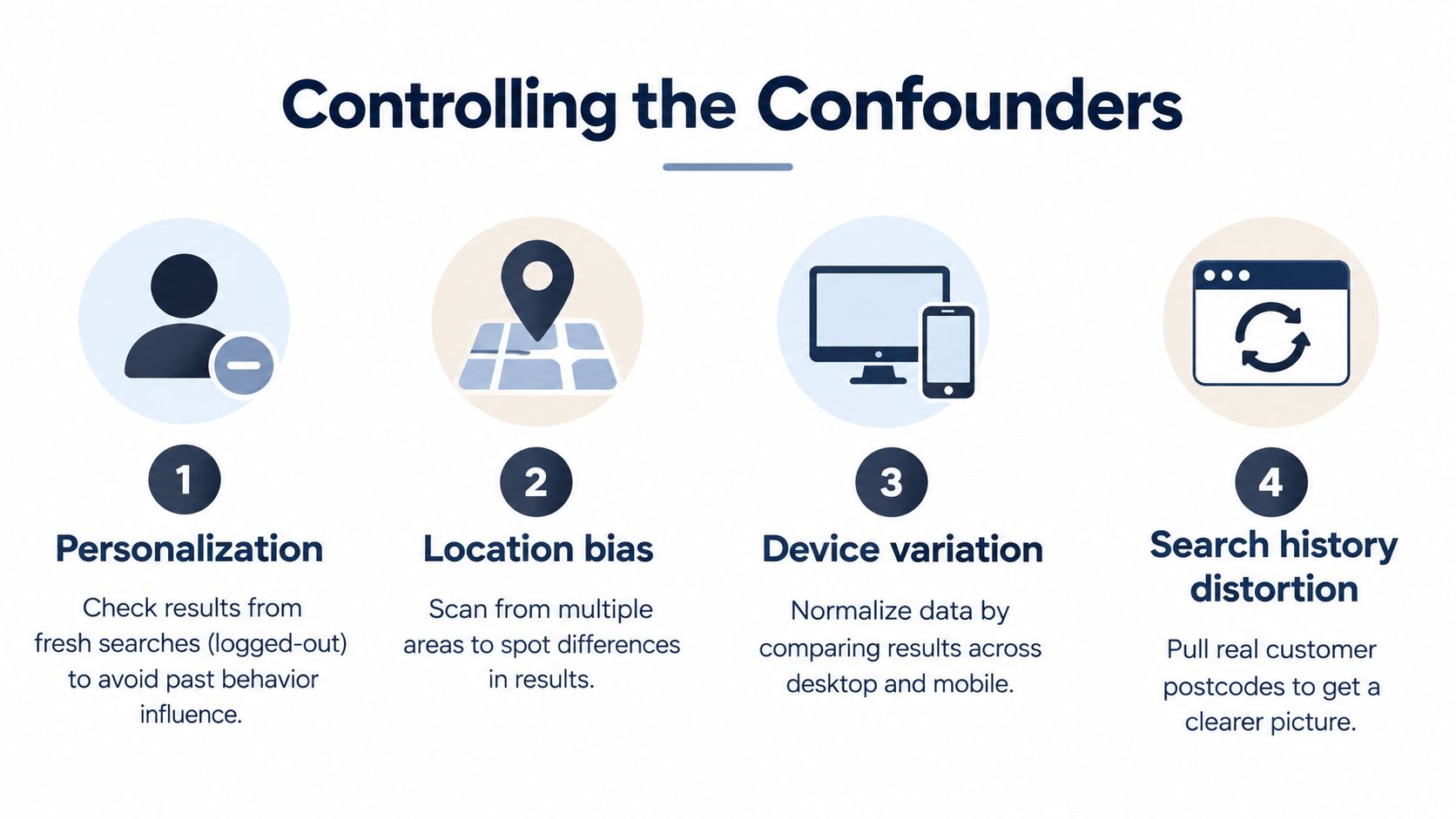
Before accepting a single result, confirm that the scan used the intended device, coordinates, browser state and schedule. A practical Google Business Profile optimisation checklist can then be used to inspect the profile factors that the business can influence, including categories, completeness, photos and reviews.
Control the conditions first. Interpret the movement second.
Building a Geo-Grid That Reflects Real Demand
A useful geo-grid starts with customers, not with the facility postcode. The centre point should represent the market the business wants to understand, while the individual coordinates should reflect where customers live, work and search.
Want a free audit like this for your own site?
We'll show you exactly what's holding your rankings and conversions back. No sales pitch.
Get My Free AuditStart with customer locations
Pull customer postcodes from the CRM, booking system, call records and available GBP reporting. Remove duplicates, separate existing customers from unqualified enquiries and group the remaining locations into practical demand zones.
A self-storage operator might discover that enquiries cluster around a railway station, a dense residential district and a commercial estate rather than spreading evenly around the facility. Those zones deserve more attention than empty parts of a mathematically symmetrical circle.
The grid should also reflect travel behaviour. Google's Local Map Centre and Google Maps routing don't always describe the same practical journey. A river, ring road, one-way system or rail line can make a short straight-line distance feel much longer to a customer.
Choose density and radius deliberately
A 3×3 grid can be sufficient for a single-site business with a tight service area and limited reporting needs. A 5×5 grid provides more detail for a town or compact urban market. A 7×7 grid gives a broader view for a city catchment or a multi-site comparison, provided the radius reflects actual demand rather than an arbitrary circle.
Dense UK cities require particular care. Postcode sectors can cluster closely while still representing very different streets, housing types and travel patterns. A London facility may need separate zones for neighbouring districts, while a rural operator may need fewer points spread along the roads customers use.
Select keywords by intent
A useful keyword set normally contains four groups:
- Brand queries: the facility name and branded variations.
- Category queries: terms such as self-storage or storage units.
- Service and location queries: combinations involving the service, town, borough or district.
- Problem queries: searches describing the need, such as temporary storage during a move or business storage.
A focused local keyword research process helps separate terms that describe genuine commercial intent from terms that attract curious but unlikely visitors.
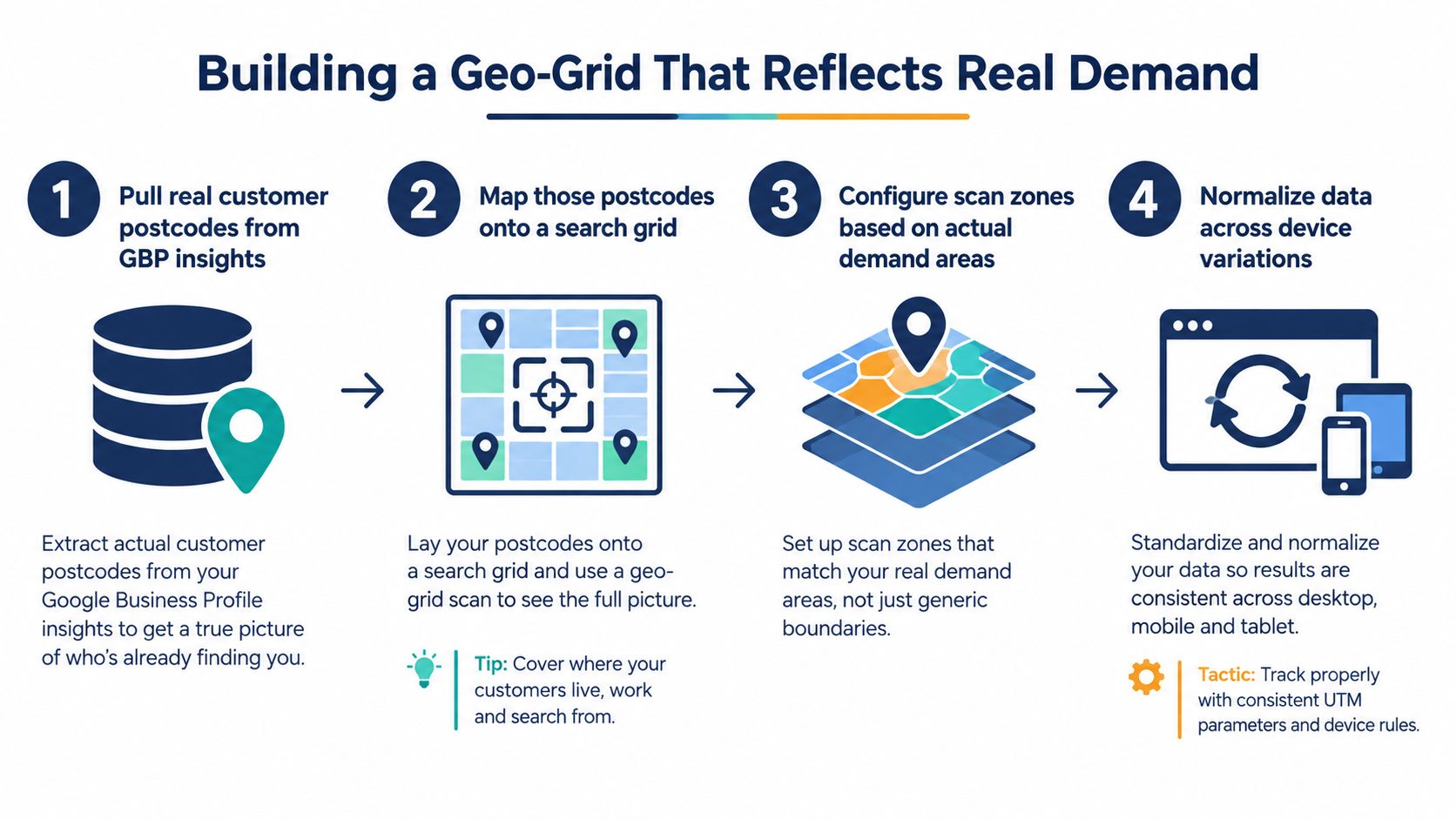
Before paying for a recurring scan, validate the grid against real demand:
- Postcodes: Do the points include the areas represented in the CRM and booking data?
- Travel: Does the radius reflect realistic drive-time catchments?
- Intent: Are the keywords tied to services the business sells?
- Overlap: Are nearby facilities and competing sites included for comparison?
- Devices: Will the reporting distinguish stable desktop monitoring from mobile experience checks?
A grid that doesn't represent customers can still produce clean-looking charts. It just won't answer a commercially useful question.
Reading Maps Visibility Beyond Position One to Three
Position one to three is easy to communicate, which is why it dominates local reports. It's also incomplete. In 2026, a business can be visible through profile actions, reviews, web content and Ask Maps answers even when the conventional pack is reduced, displaced or absent from the tracked result.
The reporting model should therefore separate visibility, consideration and conversion. A grid position indicates where a listing appeared from selected coordinates. It doesn't prove that a customer noticed it, trusted it or contacted the business.
Match each signal to a customer action
Calls are usually the strongest direct signal for a service-led business, but call volume without duration, recording review or CRM qualification can overstate value. A missed call from a poor-fit search is not equivalent to a booking enquiry.
Direction requests matter for facilities that depend on visits. Website clicks indicate deeper consideration, while booking actions and messages can show stronger intent. WhatsApp integration has also changed the profile conversation route, especially for businesses that need to answer availability, pricing or access questions quickly.
Photo views sit earlier in the journey. They can indicate profile engagement, but they shouldn't receive the same reporting weight as a qualified call or completed booking. Ask Maps answers add another complication because the customer may receive information assembled from profile data, reviews, photos and website content without following the traditional pack path.
| Signal | Funnel stage | Reporting weight |
|---|---|---|
| Grid presence | Discovery | Contextual |
| Website click | Consideration | Medium |
| Photo view | Consideration | Light |
| Direction request | Visit intent | High where visits matter |
| Phone call | Enquiry | High, qualified by duration and outcome |
| Booking action | Conversion intent | Very high |
| WhatsApp message | Enquiry and consideration | High when response speed is managed |
| Ask Maps visibility | Discovery and consideration | Track qualitatively until attribution is reliable |
A useful local-search marketing framework should connect discovery with action rather than treat rankings as the final outcome. The Come Together Media LLC local search marketing guide provides helpful context for thinking about local visibility as part of a wider customer acquisition system.
Weight the signals by commercial reality
Each business should define its own reporting hierarchy. For self-storage, a completed booking or qualified call should outrank a photo view. For a destination retailer, direction requests may deserve more attention. For a service-area business, a call from a target postcode may matter more than a direction request that leads nowhere.
The monthly review should ask whether movement occurred in the zones that matter and whether profile actions changed alongside it. If rank improved but calls and bookings did not, the team should inspect the offer, category relevance, profile content, tracking and SERP presentation before declaring success.
A higher position is evidence of visibility. It isn't evidence of revenue.
Reporting Cadence and a Self-Storage Template
Reporting works when each audience receives the amount of detail needed for a decision. A facility manager doesn't need a full competitor matrix every morning. A marketing lead does need enough recurring evidence to spot a weak location before the quarterly review.
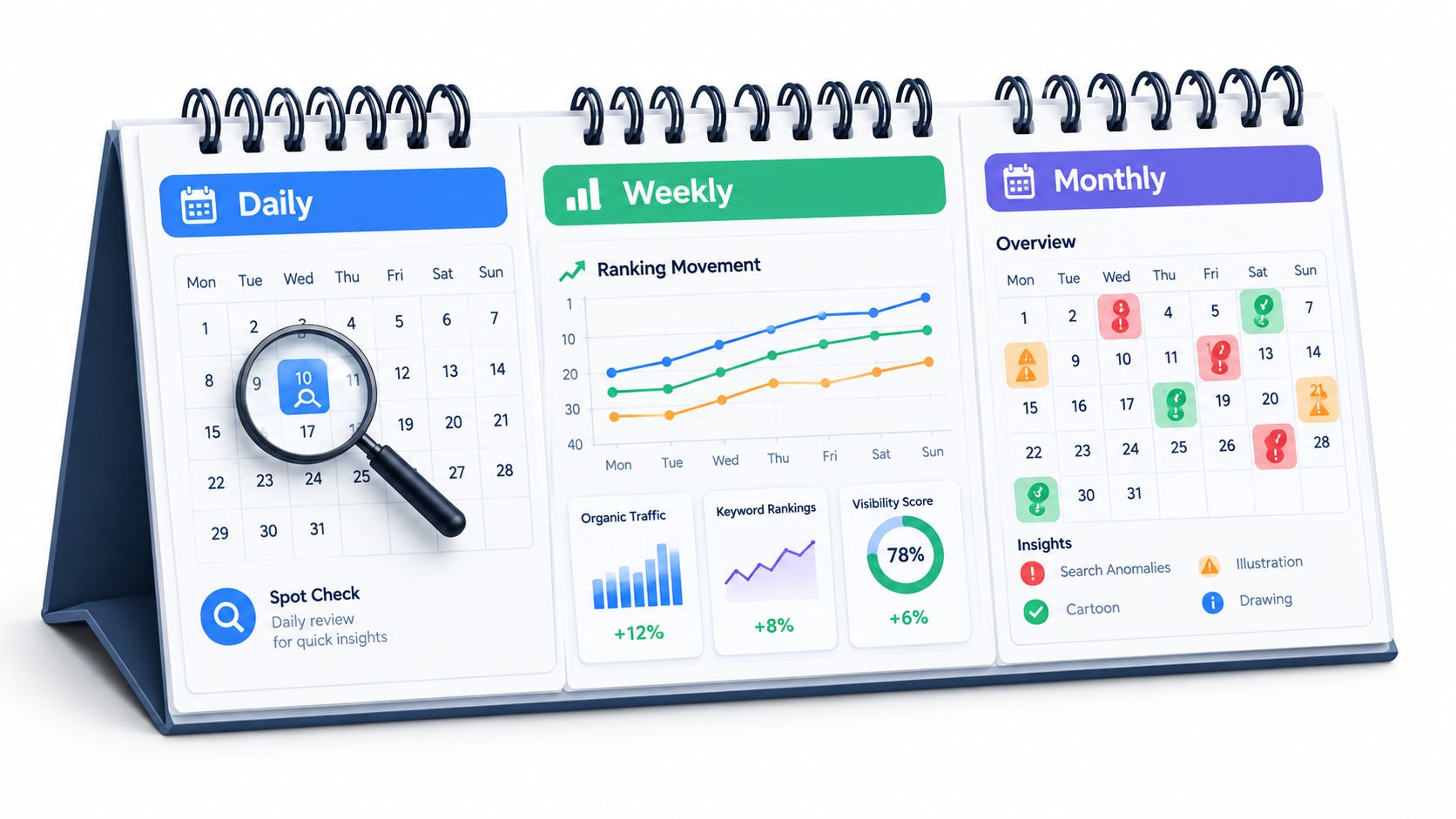
Use three reporting layers
Daily monitoring should stay narrow. Spot-check a small sample of important grid points for one priority site, then review unusual GBP activity such as an unexpected call or message change. This is an alert layer, not a performance verdict.
Weekly reporting should compare calls, direction requests, bookings and messages with the key visibility areas. Review any change in Ask Maps answers or profile presentation where the business can observe it, and note competitor entrants that appear repeatedly rather than treating one appearance as a trend.
Monthly reporting should contain the complete picture:
- Local pack and grid position by site and priority keyword.
- Competitor presence and changes across the same coordinates.
- GBP calls, website clicks, direction requests, bookings and messages.
- Photo engagement and profile content activity.
- Call-tracking outcomes, including qualified enquiries.
- Search Console clicks for branded and location-related queries.
- Performance of GBP landing pages with consistent UTM tagging.
- Profile health, categories, reviews, photos and service information.
A practical self-storage template
The first page should show each facility, its priority catchment zones and the proportion of tracked queries where it remains visible. The next page should connect those zones with calls, directions, messages and bookings, so stakeholders can see whether the strongest visibility occurs where customers convert.
A competitor page should list the businesses entering the local results across target areas, with notes on categories, reviews, photos and profile freshness. A measurement page should reconcile GBP actions with call tracking, CRM outcomes and Search Console clicks rather than presenting disconnected totals.
A local SEO reporting structure helps turn the raw export into an action-led document. The final slide should contain three decisions, what changed, what likely caused it and what will be tested next.
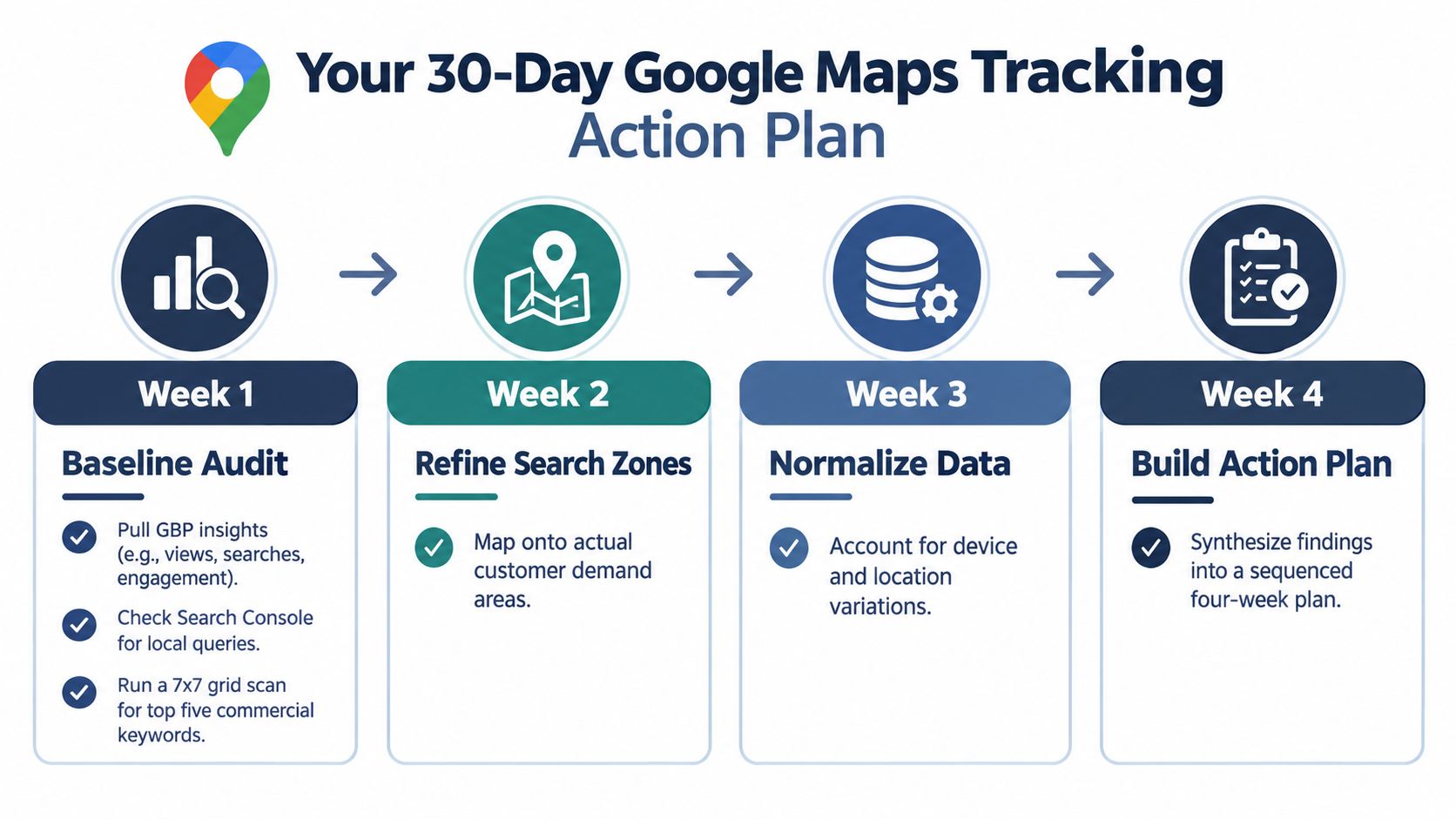
Your 30-Day Google Maps Tracking Action Plan
A useful first month should produce a dependable baseline and a repeatable decision process. It shouldn't become a month-long hunt for a perfect ranking number.
Week 1 establishes the baseline
Pull GBP insights, Search Console queries and CRM location data. Run a 7×7 scan for the five most commercially important keywords, using coordinates that represent real customer demand rather than only the business address.
Record competitor names, visible pack formats, profile actions and any obvious differences between desktop and mobile. Keep screenshots of important searches so a later layout change isn't mistaken for a ranking loss.
Week 2 removes measurement noise
Audit the search environment. Confirm that scans use logged-out browsers, consistent devices, fixed coordinates and an agreed schedule. Identify whether the report mixes brand, category, service-location and problem queries, then separate them so one group doesn't hide weakness in another.
Document the protocol in plain language. A future agency or internal team should be able to reproduce the scan without guessing which browser, device or location was used.
Week 3 connects visibility with outcomes
Overlay call-tracking data, direction requests, booking records and messages on the geo-grid. Look for areas where visibility is strong but enquiries are weak, and areas where modest visibility still produces valuable customers.
Use the findings to prioritise practical profile work:
- Category completeness: Check that the primary and secondary categories reflect the actual service.
- Photo freshness: Keep facilities, access routes and storage options accurately represented.
- Service information: Update descriptions and landing pages when the offer changes.
- Post cadence: Publish useful updates that answer customer questions rather than filling space.
- Review velocity: Maintain a steady, compliant review-request process and respond consistently.
Week 4 turns the baseline into a system
Build the recurring report with a concise stakeholder page, a site and keyword visibility view, a conversion overlay, a competitor comparison and a list of actions. Set the daily, weekly and monthly review rhythm, then assign ownership for profile edits, call review, review requests and data quality.
Before renewing any tracking tool, ask two questions: Which ranking movement changed revenue? And Which GBP action this month changed the next quarter's visibility? If the vendor can't support those questions with reliable location controls, first-party data connections and transparent exports, the report may be creating confidence rather than insight.
Amax Marketing provides local SEO audits, reporting across rankings, calls and direction requests, and software that tracks local keyword visibility by area over time. For a review of how that measurement could work across self-storage sites or other UK locations, visit Amax Marketing.