
Last updated:
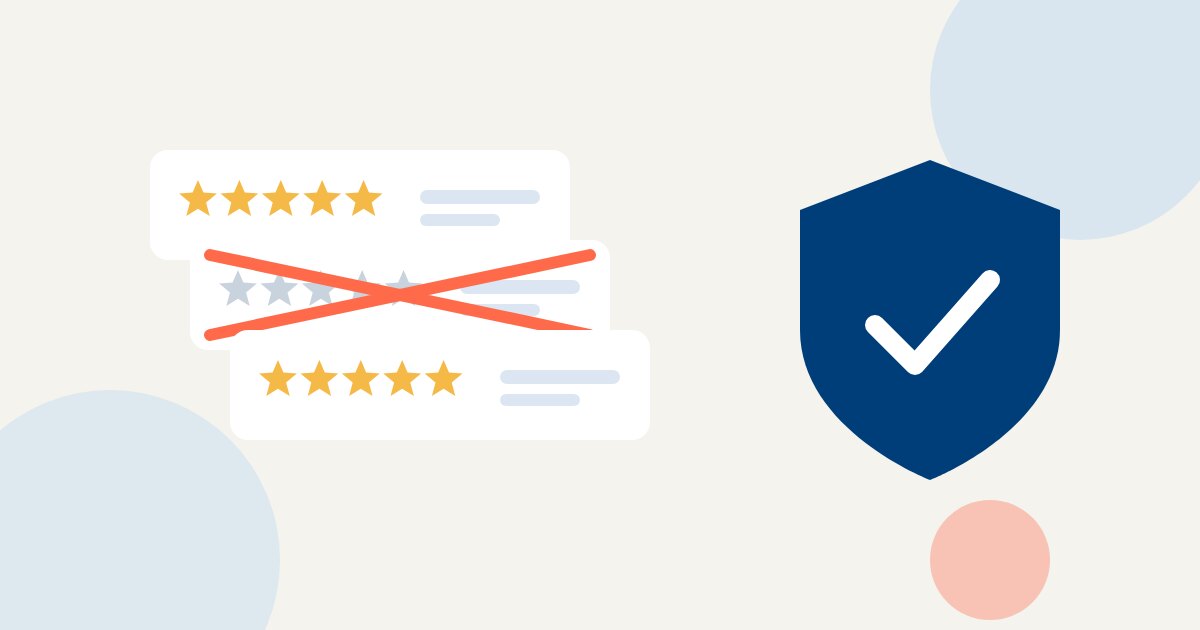
Quick answer: Since 6 April 2025, the Digital Markets, Competition and Consumers Act 2024 (DMCC Act) has banned fake reviews, concealed incentivised reviews and false or misleading review information in the UK. Businesses that publish reviews must take reasonable and proportionate steps to prevent and remove them, and the Competition and Markets Authority (CMA) can fine up to 10% of global turnover.
Reviews are one of the strongest trust signals in local search, so the rules affect almost every business. This guide is general information, not legal advice.
What does the DMCC Act ban?
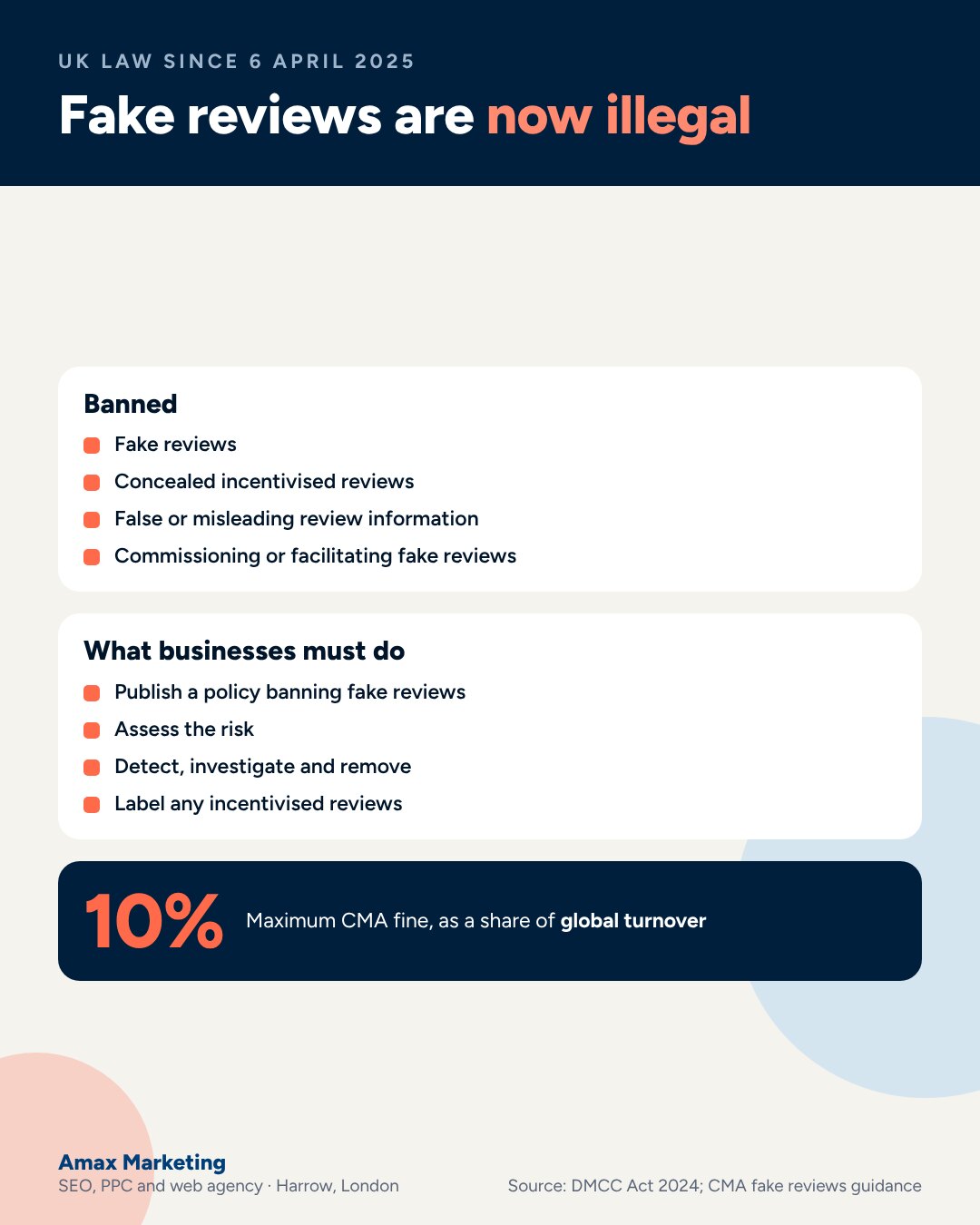
- Fake reviews: reviews that claim to be genuine but are not, including reviews written by staff or bought from third parties.
- Concealed incentivised reviews: reviews given in return for a discount, gift or other reward without that being made clear.
- False or misleading review information: for example, ratings based on fake reviews or presenting reviews in a misleading way.
- Commissioning or helping others to write or publish fake reviews.
Who do the rules apply to?
Any business that publishes consumer reviews, including on its own website, and anyone who writes, commissions or facilitates fake reviews. The CMA says each trader that publishes reviews is responsible, even if a third party manages them.
What must businesses do to comply?
The CMA’s guidance on fake reviews says businesses should take reasonable and proportionate steps, such as:
- a clear, published policy that prohibits fake and concealed incentivised reviews
- a risk assessment of how fake reviews could appear
- processes to detect, investigate and remove banned reviews
- clear labelling of any reviews linked to incentives
What are the penalties?
The CMA can now enforce consumer law directly and fine businesses up to 10% of global turnover. Reputational damage can be just as costly.
Can I still ask customers for reviews?
Yes. Asking every customer for honest feedback is fine and encouraged. What you must avoid is offering rewards without disclosure, only asking happy customers in a way that misleads, or hiding negative reviews. Google’s own policies also prohibit incentivised reviews.
Want a free audit like this for your own site?
We'll show you exactly what's holding your rankings and conversions back. No sales pitch.
Get My Free AuditWhy are my Google reviews disappearing?
Google removes reviews it believes are fake or break its policies, and it has warned businesses about spikes in spam reviews. Read our guide on why Google reviews disappear.
How do I build reviews the right way?
- ask every customer, at the right moment
- make it easy with a direct link or QR code
- reply to every review, positive or negative
- learn from complaints and fix the cause
- monitor reviews so you spot fake ones quickly
Our Amax Local platform helps collect, monitor and reply to reviews. Reviews matter most in trust-driven sectors such as drainage and funeral services.
How can Amax Marketing help?
We help businesses build genuine reviews and protect their reputation. See our guide to online reputation management, or book a free discovery call or call 020 8515 7980.
Frequently asked questions
Is it illegal to offer a discount for a review?
It is banned if the incentive is not clearly disclosed. Google’s policies prohibit incentivised reviews altogether.
Can I delete negative reviews on my website?
Not to mislead customers. Hiding genuine negative reviews can count as misleading review information.
Who enforces the fake reviews ban?
The Competition and Markets Authority (CMA).
Do the rules apply to small businesses?
Yes. Any business that publishes or commissions consumer reviews is covered.